Fire Ants: Stings, Mounds and the Two-Step Method That Works
Fire ants are small reddish-brown stinging ants, mostly the invasive red imported fire ant, that build domed soil mounds in sunny lawns across the southern US. Workers come in mixed sizes from about 2.4 to 6 mm (an eighth to a quarter of an inch), and they bite to grip but sting to inject venom, which leaves a white pustule a day later. The method extension entomologists recommend is a broadcast bait across the whole yard, then treating only the mounds that remain.
Much of what circulates about fire ants is half right. They are venomous, not poisonous; the bite is not what hurts; and grits and club soda have been tested and do not work.
What do fire ants look like?
The red imported fire ant, Solenopsis invicta, is the one most Americans meet. UF/IFAS describes workers of many sizes between 2.4 and 6 mm, red to brown with a black gaster (the rear section), a two-segmented waist, 10-segmented antennae ending in a two-segmented club, and a visible sting at the tip. Mixed sizes in one trail is the best field clue; our ant identification guide covers the waist and size checks for other household species.
| Ant | Worker size | Colour | Nest | Sting | Where in the US |
|---|---|---|---|---|---|
| Red imported fire ant | 2.4 to 6 mm, mixed sizes | Reddish brown, darker gaster | Domed mound of loose soil, no opening on top | Yes, pustule a day later | Southeast, eastern two-thirds of Texas, parts of California |
| Black imported fire ant | About 3 to 6 mm, mixed sizes | Darker brown | Similar mound | Yes | Northeast Mississippi and northwest Alabama |
| Hybrid imported fire ant | About 3 to 6 mm, mixed sizes | Reddish brown to dark brown, varies within one colony | Similar mound | Yes | Georgia, Alabama, central Mississippi, Tennessee; Lee County, Virginia since 2022 |
| Tropical (native) fire ant | Mixed sizes; large workers have square, oversized heads | Reddish brown | Soil mounds | Yes | Native; Florida (far less common than the imported ant) and Texas |
| Harvester ants | About 6 to 13 mm | Red, rust, brown or black | Flat disc or low mound in a cleared circle, single central hole | Yes, more painful | Mostly the West and Southwest; one Florida species |
| Tawny crazy ant | 2.0 to 2.4 mm, all one size | Reddish brown | No mound; under debris and in voids | No | Gulf Coast, Texas to Florida |
Compiled by The Pest Control Brief from UF/IFAS EENY-195 (IN352), IN1076 and EENY-610, Virginia Cooperative Extension ENTO-593 and Texas A&M AgriLife ENTO-002 and E-402.
Large red ants around a single hole in a cleared circle are native harvester ants. Small, erratic, same-sized ants with no mound are probably crazy ants, which need a different plan.
The mound is the giveaway
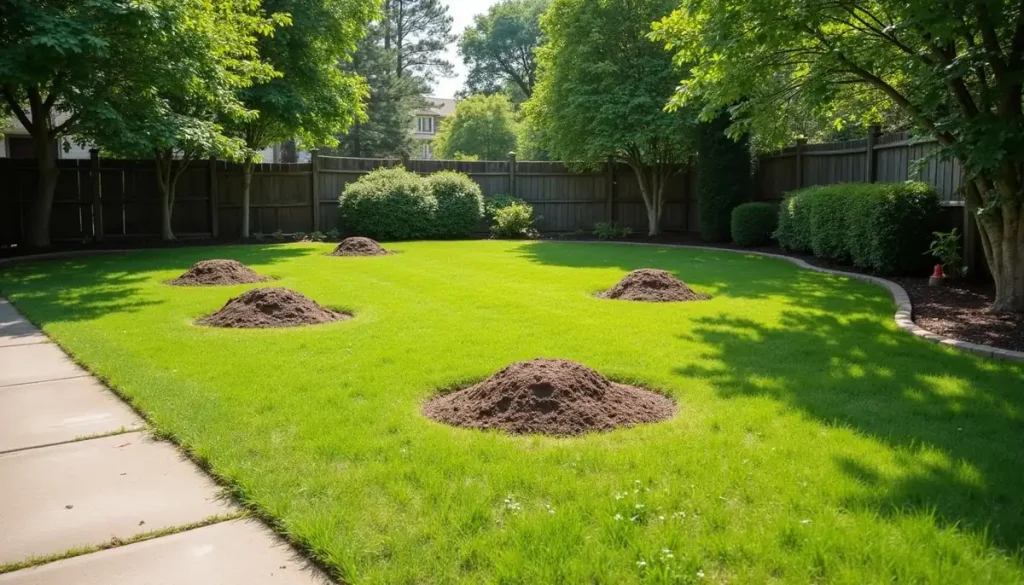
NC State Extension describes a distinct dome with no opening at the top, in the open rather than in woods; the ants use side tunnels that can surface several feet away. UF/IFAS puts mounds at seldom more than 18 inches across. In hot, dry spells the ants go deep and mounds seem to vanish; after heavy rain, Texas A&M says, numerous mounds pop up.
Fire ants vs red ants
“Red ant” is a nickname, not a species. In the South it usually means the red imported fire ant; in the West it often means a red harvester ant. A fluffy dome with no top hole points to fire ants; one large hole in a bare patch points to harvesters.
Where do fire ants live?
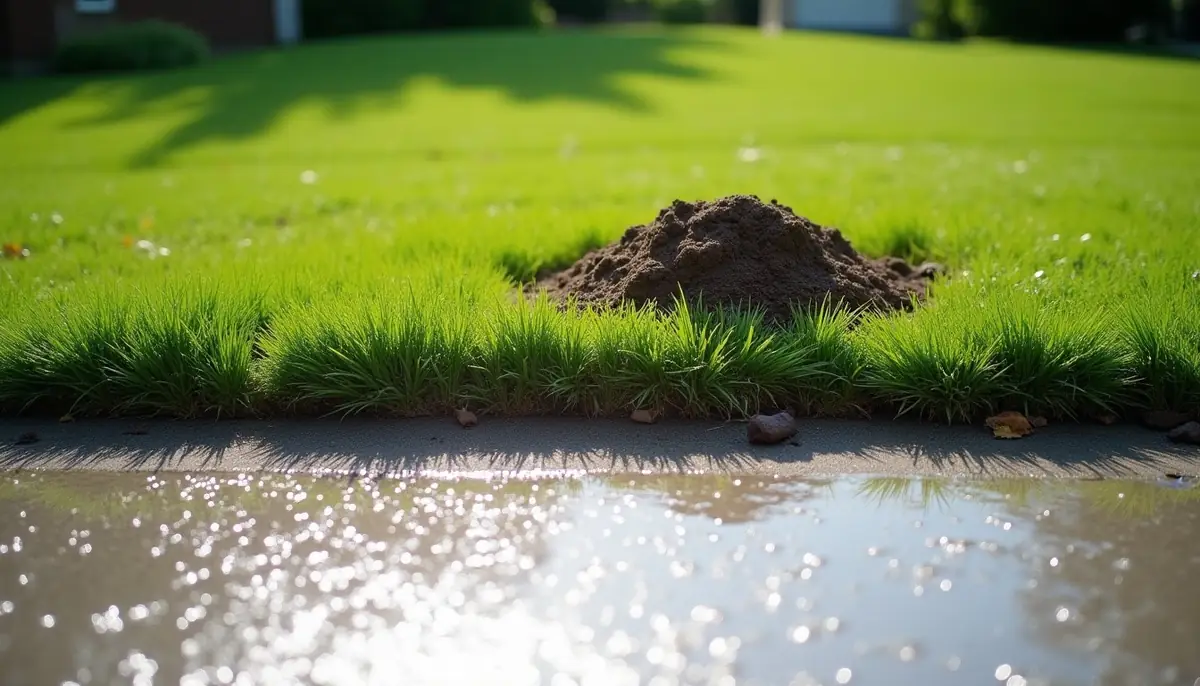
Red imported fire ants arrived from South America through Mobile, Alabama, or Pensacola, Florida, between 1933 and 1945, according to UF/IFAS. Texas A&M places them across the eastern two-thirds of Texas and all of the southeastern US. Virginia Cooperative Extension says they prefer open, sunny ground such as lawns, pastures, parks and pond edges, and favour foundations and concrete where the sun keeps the colony warm. The regulated area is set by a federal quarantine, which we cover in our fire ant quarantine guide.
Our iNaturalist analysis shows where people photograph them. Allowing for recording effort, Louisiana leads, then South Carolina, Texas and Florida; Texas alone contributes 10,918 of 22,028 US records.
Virginia Cooperative Extension reports that hybrid fire ants appear more cold-tolerant than either parent, and the range has spread farther north than once projected.
Do fire ants bite or sting?
Both, but only the sting matters. UF/IFAS explains that the worker grips with its mandibles, then lowers its gaster to sting, and only the sting causes the pain and pustule. Texas A&M adds that the ant may pivot and sting again, leaving a circle of sting sites.
Speed explains the dozens of stings from one misstep. Texas A&M reports that hundreds of ants can climb a leg at about 1.6 cm per second and begin stinging within 10 to 20 seconds, almost simultaneously. The response is slower below about 55°F and above 95°F.
| Time after the sting | What usually happens | Source |
|---|---|---|
| First few minutes | Burning pain at the site, which gives the ant its name | Texas A&M ENTO-005 |
| Within 20 minutes | The spot reddens and swells into a bump or hive | Texas A&M ENTO-005 |
| Several hours to a day | A white, fluid-filled sterile pustule forms; no other Texas ant causes this | Texas A&M ENTO-005; UF/IFAS EENY-195 |
| Several days | The pustule persists and is often itchy; scratching it open can lead to infection | Texas A&M ENTO-002 and ENTO-005 |
| Several weeks | For most people the pustule dries up; some are left with a brown scar for months | Texas A&M ENTO-005 |
The pustule is not infection. Texas A&M explains that venom alkaloids kill cells, white blood cells gather, and the result is sterile while intact. So leave it alone: once scratched or popped, bacteria can get in. For many stings, or any reaction away from the sting site, talk to a doctor; our bite identification guide helps tell fire ant stings from other bites.
Are fire ants poisonous, and are they dangerous?
Fire ants are venomous rather than poisonous. UF/IFAS says about 95 per cent of the venom is alkaloids, which cause the pain and pustule; a small protein fraction triggers allergy.
For most people they are a painful nuisance; for a minority, dangerous. The published figures:
- Exposure is fast: in a 1995 study of 107 medical students training in San Antonio for three weeks, 51 per cent were stung in the field; 96 per cent of those had only a pustule or small local reaction and none had a systemic reaction (Tracy and colleagues, Journal of Allergy and Clinical Immunology).
- A survey of 1,286 South Carolina health practitioners estimated that more than 33,000 people a year sought medical attention for stings, about 0.94 per cent of the population, and 660 were treated for anaphylaxis (Caldwell and colleagues, 1999, as summarised by Texas A&M).
- Between 17 and 56 per cent of people stung develop venom-specific antibodies and get hard, itchy lumps at later stings (Texas A&M ENTO-005).
Anaphylaxis rates are where the sources disagree. The same Texas A&M fact sheet gives 0.6 to 6 per cent of people stung, citing deShazo and colleagues, who also counted more than 80 deaths, and elsewhere says less than 1 per cent. Read it as uncommon but real. Texas A&M lists dizziness, headache, nausea, shortness of breath and sweating as signs needing immediate medical attention, and names infants, the elderly and anyone who cannot move away as most at risk of mass stinging.
A Scripps Howard Texas Poll in March 2000 found 79 per cent of Texans had been stung that year, varying sharply by region.
Why are there fire ants in my house?
Usually weather or food. UF/IFAS notes that after heavy rain a colony may move inside homes, and that foragers seek sweets, proteins and fats and are sometimes drawn to dirty laundry. Texas A&M adds that whole colonies occasionally move into wall voids in very hot, dry weather or floods.
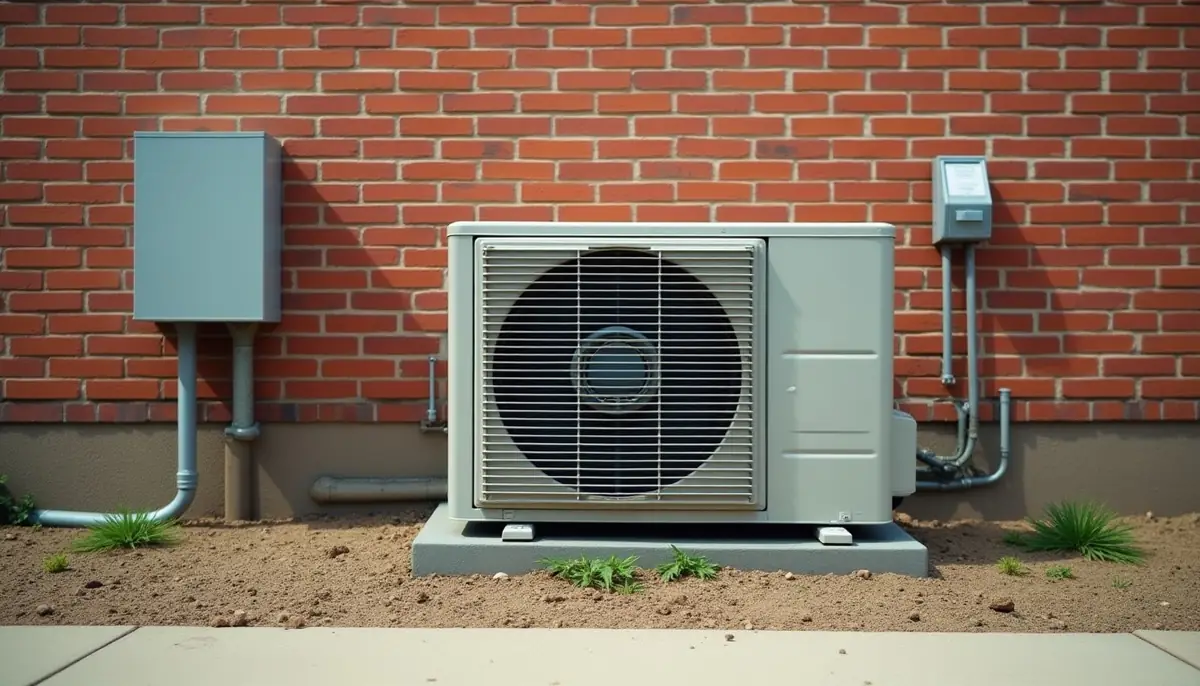
Look for brood. Workers alone may be foraging from outdoors; eggs, larvae and pupae among them, Texas A&M says, mean a colony has moved in. Virginia Cooperative Extension also reports colonies in air conditioners and switch boxes, shorting circuits. A colony in a wall void or slab is a job for a licensed professional; foragers from outside call for the yard treatment below.
When are fire ants most active?
Records peak in spring: our iNaturalist data show US records rising to 3,655 in April, falling to 794 in July and recovering in September and October.
The midsummer dip fits ants retreating deep in hot, dry soil, and the autumn rise matches the second treatment window. UF/IFAS records six to eight mating flights a year between spring and autumn, of up to 4,500 winged ants each, usually on warm days after rain.
What is a fire ant’s natural predator?
In the US, nothing eats them fast enough to matter. Texas A&M explains that the ant arrived with few of its parasites or pathogens, so densities here are many times higher than in South America.
| Natural enemy | What it does | US status |
|---|---|---|
| Phorid flies (Pseudacteon) | Lay an egg in a worker; the maggot feeds inside for about 3 weeks and the head falls off. Three or four flies make ants stop foraging | Six species released and established; parasitism only 1 to 3 per cent of workers |
| Kneallhazia solenopsae (microsporidian) | Shortens the lives of workers and queens; colonies decline over months | Found or released in most infested southeastern states since 1996 |
| Beauveria bassiana (fungus) | Grows inside the ant | Works poorly applied to soil; no commercial bait product as of 2014 |
| Native ants | Compete for food and kill newly mated queens | Worth keeping; most cannot outcompete fire ants alone |
| Dragonflies, birds, lizards, spiders, toads | Kill queens and workers | Background losses only |
| Armadillos | Dig mounds and eat some workers | Not effective control |
Compiled by The Pest Control Brief from Texas A&M AgriLife ENTO-008 and ENTO-009 and UF/IFAS EENY-195.
Texas A&M is plain that biological control will suppress fire ants, not eradicate them.
How to get rid of fire ants
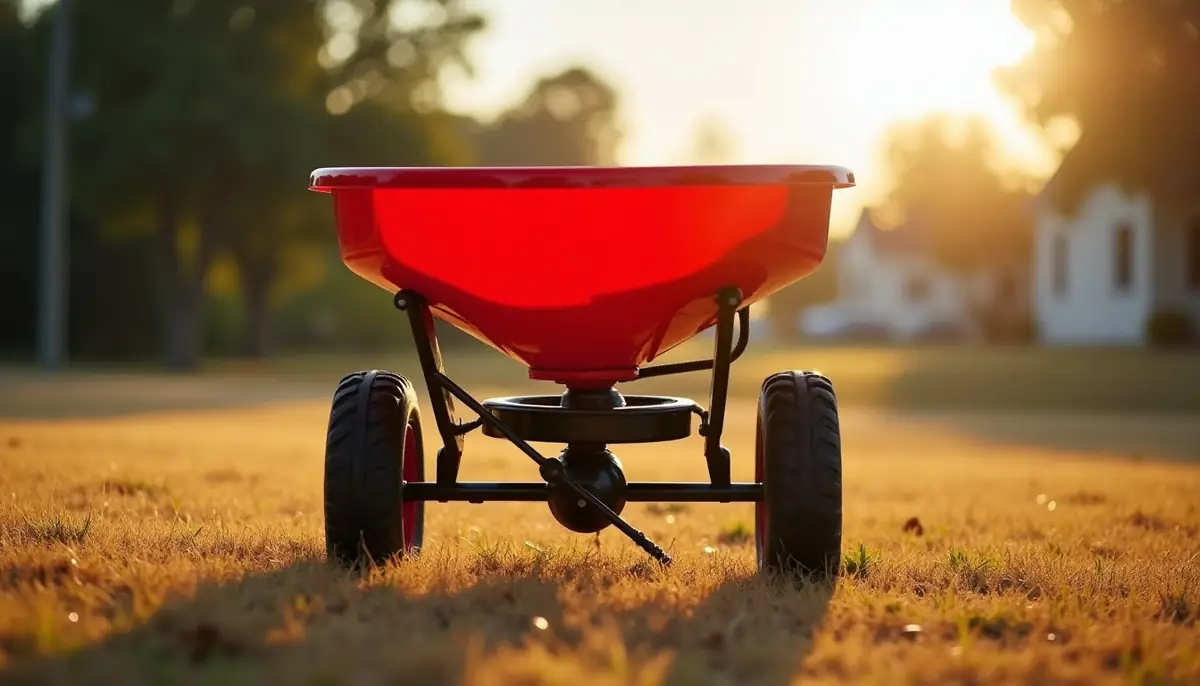
The extension standard is the two-step method: broadcast a fire ant bait over the whole area, then treat only the nuisance mounds that remain. Texas A&M credits broadcast bait with an 80 to 90 per cent colony reduction applied once or twice a year, and Clemson reports 85 to 95 per cent in most trials. Foragers carry bait home to the queen, and UF/IFAS puts egg to adult at 22 to 38 days, part of why slow baits take weeks.
- Check that ants are foraging. Clemson says fire ants forage when surface soil is between 70°F and 95°F; put down a little bait and they should find it within 30 minutes.
- Broadcast on dry ground. Clemson recommends a 12-hour dry window before rain or irrigation. Follow the label rate; NC State notes doubling it does not double the kill.
- Treat problem mounds later. Clemson advises waiting seven to ten days before treating individual mounds; this step is often unnecessary.
- Repeat on a calendar. Texas A&M suggests once or twice a year; Mississippi State suggests three times, around Easter, the Fourth of July and Labor Day.
Texas A&M does not suggest the two-step where there are 15 to 20 mounds per acre or fewer and plenty of native ants; there, treat mounds individually. Bait speeds by active ingredient are in our fire ant quarantine and two-step guide, and typical prices are in ant control costs.
Home remedies that fail or backfire
| Remedy | What extension testing found |
|---|---|
| Grits or Malt-O-Meal | No documented control. Only older larvae digest solid food, and ants do not swell and burst |
| Club soda | No documented control; the carbon dioxide does not kill the colony |
| Aspartame, baking soda, cinnamon, coffee grounds, molasses | Failed to document control |
| Boiling water | About 3 gallons per mound eliminates roughly 60 per cent of mounds treated; kills grass and risks burns |
| Shovelling one mound onto another | Ineffective, because multiple-queen colonies tolerate neighbours |
| Gasoline or other fuels | Strongly discouraged: not registered, flammable, kills plants and pollutes soil and groundwater |
Compiled by The Pest Control Brief from Texas A&M AgriLife ENTO-009, Mississippi State University Extension and UF/IFAS EENY-195.
Frequently asked questions
Are fire ants poisonous?
They are venomous rather than poisonous: the harm comes from venom injected by the sting, not from touching or eating the ant. About 95 per cent of the venom is alkaloids that cause burning pain and a sterile white pustule a day later. A small protein fraction can trigger allergic reactions, and Texas A&M estimates severe reactions in under 1 per cent to about 6 per cent of people stung.
What is a fire ants natural predator?
In the US, no predator controls them. Dragonflies, birds, lizards, spiders, toads and other ants kill some queens and workers, and armadillos dig mounds without reducing them. Researchers have released six species of South American phorid flies, which parasitise workers and make colonies stop foraging, and a microsporidian disease now occurs across most infested southeastern states. Texas A&M says these suppress fire ants but will not eradicate them.
How to get rid of fire ants?
Extension services recommend the two-step method. Broadcast a labelled fire ant bait across the whole yard when ants are foraging, with surface soil between 70°F and 95°F and a dry 12-hour window, then treat only nuisance mounds seven to ten days or more later. Bait cuts colonies by 80 to 95 per cent in trials. Repeat once to three times a year, as local extension advises.
Do fire ants bite or sting?
Both. A fire ant grips the skin with its mandibles, then curls its abdomen under and drives in the sting, often pivoting to sting several times in a circle. UF/IFAS says only the sting causes the pain and the white pustule. Ants grip so tightly that water will not remove them; Texas A&M advises brushing them off quickly by hand or with a cloth.
What do fire ants look like?
Red imported fire ant workers are reddish brown with a darker abdomen and range from about 2.4 to 6 mm, an eighth to a quarter of an inch, with several sizes in one trail. They have a two-segmented waist, antennae with a two-segmented club and a visible sting. The mound is a fluffy soil dome with no opening on top, usually in a sunny spot.
Sources
- Collins L and Scheffrahn RH, Red Imported Fire Ant, Solenopsis invicta Buren, UF/IFAS Extension EENY-195 (EDIS IN352), revised 2013, reviewed 2020.
- Drees BM, Medical Problems and Treatment Considerations for the Red Imported Fire Ant, Texas A&M AgriLife Extension ENTO-005, 2014.
- Brown W, Welcome to Texas: Avoiding the Sting of Fire Ants, Texas A&M AgriLife Extension ENTO-002, 2014.
- Nester PR, Flooding and Fire Ants: Protecting Yourself and Your Family, Texas A&M AgriLife Extension ENTO-006, 2014.
- Drees BM and Puckett R, Potential Biological Control Agents for the Red Imported Fire Ant, Texas A&M AgriLife Extension ENTO-008, 2014.
- Brown W, Natural, Organic, and Alternative Methods for Imported Fire Ant Management, Texas A&M AgriLife Extension ENTO-009, 2014.
- Drees BM and colleagues, Fire Ant Control: The Two-Step Method and Other Approaches, Texas A&M AgriLife Extension L-5496, 2008 (later reissued as ENTO-034).
- Clemson Cooperative Extension, Home and Garden Information Center, Fire Ant Management in the Home Lawn.
- Mississippi State University Extension, Debunking Fire Ant Control Home Remedies.
- NC State Extension, Pamlico County Center, Fire Ants (Solenopsis invicta) insect note, 2025.
- Dellinger TA, Day E and Byington A, Hybrid Fire Ants in Virginia, Virginia Cooperative Extension ENTO-593, 2024.
- Tracy JM and colleagues, The natural history of exposure to the imported fire ant (Solenopsis invicta), Journal of Allergy and Clinical Immunology 95:824 to 828, 1995.
- Texas A&M AgriLife Extension E-402, Red Harvester Ants; UF/IFAS IN1076 and EENY-610, tawny crazy ant, for the look-alike sizes and ranges.
- The Pest Control Brief analysis of iNaturalist research-grade records, pulled October 2026.