Hobo Spider: Why Its Dangerous Reputation Has Collapsed
The hobo spider is a brown funnel-web spider from Europe, found in the Pacific Northwest and Intermountain West, and it is no longer considered dangerous. Its reputation for causing flesh-damaging bites came from 1980s research that later studies could not reproduce. Archived copies show the CDC’s venomous spider page dropped the hobo spider in 2015 and now names only black widows and brown recluses. Bites are uncommon and, in the one verified Oregon case, cleared within 12 hours.
Few spiders have had their reputation rise and fall as fast. For about three decades the hobo spider was treated in the Northwest as a western counterpart to the brown recluse, and doctors diagnosed “hobo bites” from wounds alone. Then the evidence was examined properly, and almost none of it held. What remains is a common, fast-running, harmless brown spider that turns up in basements every late summer, and that very few people can correctly identify.
Hobo spider at a glance
| Hobo spider (Eratigena agrestis) | |
|---|---|
| Body length | Females 9.5 to 16.5 mm (3/8 to 5/8 in), males 7 to 13.5 mm (about 1/4 to 9/16 in) |
| Colour | Brown, with a pattern of yellowish chevrons on a grey abdomen that is easier to see in young spiders |
| Legs | Uniformly brown with no dark bands |
| Eyes | Eight, in two rows of four |
| Web | Funnel or tube-shaped retreat, usually low and often hidden under objects |
| Range | British Columbia east to Montana, Wyoming and Colorado, south through Oregon and northern Utah |
| When seen indoors | Mainly August to October, when males wander looking for mates |
| Medical status | Not considered of medical importance by UC IPM; not on the CDC’s venomous spider list |

Is the hobo spider dangerous?
Not in any way the evidence supports. The University of California’s IPM program, whose hobo spider note was written by arachnologist Richard Vetter, says the spider was designated as potentially toxic in the United States in the 1980s, that subsequent research has questioned that designation, and that today it is no longer considered of probable medical importance.
The case against the old view rests on several independent lines of research:
- Same venom as Europe. In its native Europe the hobo spider is considered medically harmless. A 2001 study in Toxicon by Greta Binford compared venoms from Washington, England and Switzerland and found no component unique to the US spiders, which she said is difficult to reconcile with claims of US-only necrotic effects. UC IPM also describes a 2001 study in which venom from both continents was injected into the same rabbit strain used in the original research, and neither produced necrotic wounds.
- Almost no verified cases. A 2004 review in Annals of Emergency Medicine found only one verified hobo bite with a necrotic lesion in the medical literature, in a patient who had a pre-existing condition that itself causes such lesions.
- No harm to red blood cells, no bacteria transfer. A 2011 Washington State University study by Gaver-Wainwright and colleagues found the venom was not harmful to vertebrate red blood cells, and that spiders exposed to MRSA did not transfer it.
- Real bites were mild. A 2014 study of 33 verified spider bites in Oregon found none caused significant symptoms or tissue death. The single hobo bite caused pain, redness and calf twitching that resolved in 12 hours.
UC IPM still advises, as a precaution, treating the hobo spider as of minor medical importance until proof is complete. Montana State University is blunter: there is no conclusive evidence that hobo spider venom causes necrosis in humans, and a large body of research shows it does not.
When did the CDC drop the hobo spider?
Many articles say the CDC removed the hobo spider from its venomous spider list in 2017. We checked archived copies of the CDC’s NIOSH venomous spiders page directly. A July 2015 copy lists three types: black widows, brown recluse spiders and hobo spiders. By early September 2015 the hobo section is gone and the page says venomous spiders in the United States include the black widow and the brown recluse. The current page still names only those two.
Hobo spider bite
Utah State University Extension says hobo spiders are not aggressive and will bite only in defence, causing mild pain and redness. Most bites from any spider happen when one is trapped against skin, in clothing, bedding or shoes.
A wound that turns ulcerated or keeps spreading is unlikely to be a hobo bite. Montana State notes that the most common cause of necrotic, non-healing wounds in the West is MRSA, a bacterial infection, and UC IPM lists a long series of infections and medical conditions that produce similar wounds. Anyone with a bite or sore that becomes inflamed, spreads or does not heal should see a doctor. If you can, catch the spider for identification, though finding a spider after a mystery bite does not prove it was the cause. Our bite identification guide explains why the mark alone tells you little.
Why do they call it a hobo spider?
UC IPM links the name to the spider’s presumed spread to distant cities along railways. Its older name, the aggressive house spider, is a mistranslation: Montana State and Utah State both note that the Latin agrestis means “of the field” or “rural”, describing its outdoor habitat in Europe, not its temperament. Utah State dates the first Pacific Northwest detection to 1936.
What states do hobo spiders live in?
UC IPM gives the North American range as British Columbia east to Montana, Wyoming and Colorado, and south through Oregon and northern Utah, which includes Washington and Idaho. It has not been documented in California by an arachnologist.
Our analysis of iNaturalist research-grade records puts Utah, Montana and Idaho well ahead once you adjust for how many people record wildlife in each state. Washington, the centre of the original hobo scare, sits in the middle. That fits UC IPM’s note that in Seattle the hobo has been competitively displaced by another European import, the giant house spider. A WSU guide adds that in western Washington cities giant house spiders typically outnumber hobos about three to one.
Read these records with care. Experts say a hobo spider can only be confirmed by its reproductive structures under a microscope, so some photographed “hobo spiders” will be look-alikes. The regional pattern is clear; individual records are less certain.
How to identify a hobo spider, and why it is so hard
Washington State University’s guide by Vetter and Antonelli is titled, fittingly, How to identify (or misidentify) the hobo spider. Its warning is that colour and size are among the least reliable features, because they vary so much within the species and overlap with similar spiders. Without a microscope, the realistic goal is to rule a spider out. With a hand lens, it is not a hobo spider if:
- The sternum has spots. Three or four pairs of light spots on the underside of the front body point to the giant house spider or the barn funnel weaver. Hobos have a light central stripe.
- There are two distinct dark stripes along the top of the front body. That suggests grass spiders or their relatives.
- The legs have dark rings. Hobo legs are uniformly coloured.
- The legs and front body are shiny dark orange to mahogany. That is likely a Callobius spider, often submitted as a hobo.
- A male’s palp ends in a long, thin, finger-like tip. The hobo’s is blunter.
Hobo spider vs wolf spider
Wolf spiders are the other big brown spider people confuse with hobos. Utah State notes that wolf spiders are often larger, up to about an inch, and do not build webs. They hunt by running down prey. Their eyes are also different: a wolf spider has a row of four small eyes beneath one large pair and a widely spaced rear pair, while the hobo has two rows of four. Our wolf spider guide covers them in detail.
Hobo spider vs brown recluse
These two barely overlap. The brown recluse lives in the south-central Midwest, from south-eastern Nebraska to south-western Ohio and south through Texas to north Georgia, while the hobo is a Northwest spider. A recluse has six eyes in three pairs and uniformly coloured, fine-haired legs without stout spines; the hobo has eight eyes. Our spider identification guide walks through recluse identification in order of reliability.
When hobo spiders show up
Utah State says males seek females from August through October, which is when they are most often found in homes. Mated females lay one to four egg sacs from September, and males die after mating. Our analysis of iNaturalist records shows a sharp late-summer peak: hobo spider records reach 286 in August, nearly three times their usual share of all records, and stay high through October. Cellar spiders, a group that lives indoors all year, stay close to their average throughout.
Hobo spider babies and the life cycle
Egg sacs are laid in autumn and usually hatch in late spring. The young spend a winter as juveniles and mature the following year, so Utah State suspects the full cycle takes about two years. The chevron pattern is usually clearest on these younger spiders, which is one reason juvenile funnel weavers get reported as hobos.
Hobo spider web
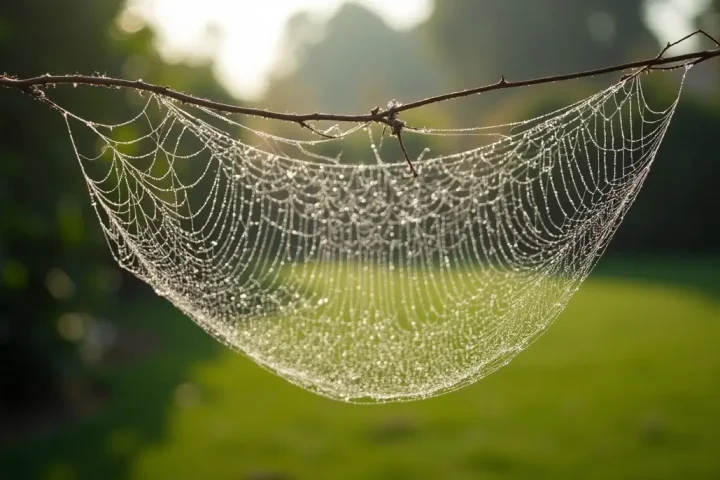
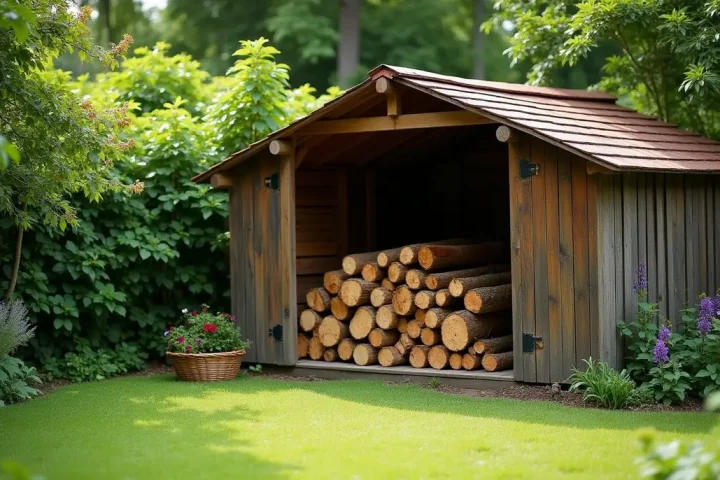
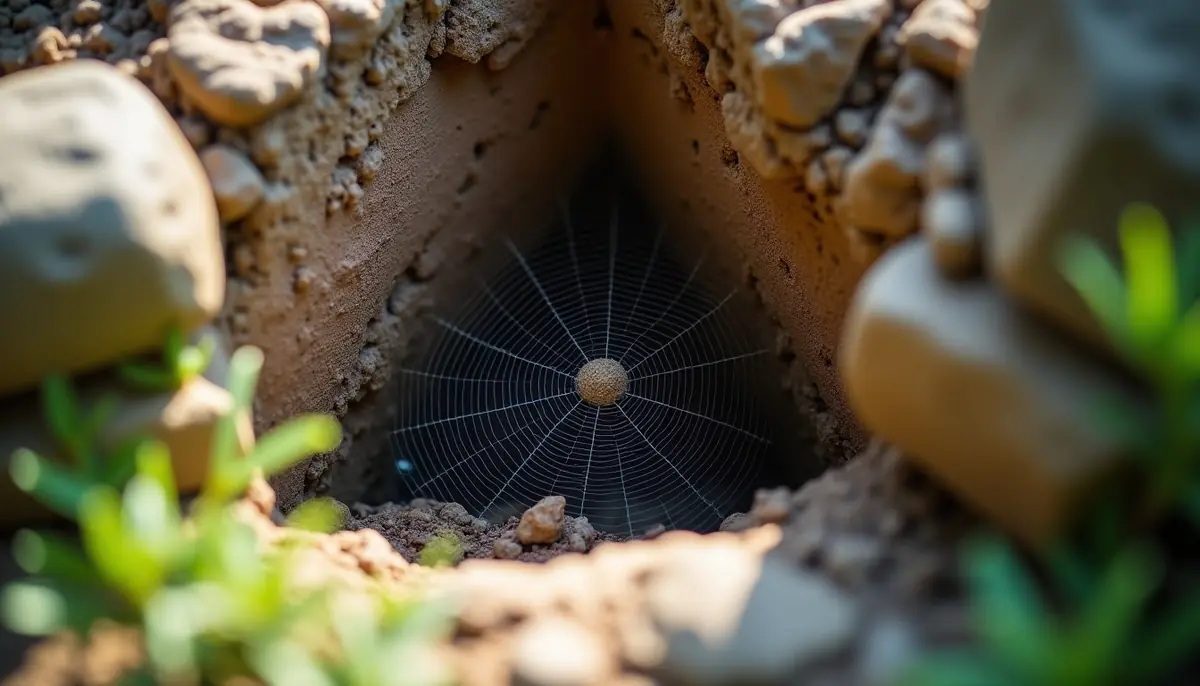
Hobo spiders belong to the funnel weaver family. Utah State describes their funnel webs in wood and rock piles, retaining walls, tall grass and foundation cracks, with the spider waiting at the small hole at the bottom of the funnel. UC IPM adds an important caution: unlike more typical funnel weavers, the hobo’s webs are almost always hidden under objects and are not noticeably funnel-like. In other words, the obvious flat sheet webs you see on lawns on a dewy morning usually belong to grass spiders and other harmless relatives.
What to do if you find a hobo spider in your house
Nothing urgent. Catch it under a jar and release it outside, or remove it with a vacuum. Utah State explains why so many end up in bathtubs and sinks: large hobo spiders are poor climbers on smooth surfaces, so they get stuck at ground level, in basements, tubs and sinks. To reduce numbers:
- Use sticky traps. Fold them and place them firmly against baseboards, where children and pets cannot reach. In peak season, August to October, Utah State suggests up to two per room.
- Seal the entry points. Fit door sweeps that touch the ground and both sides of the frame, caulk foundation cracks and add weather stripping.
- Vacuum and declutter to remove hiding places and the insects spiders feed on.
- Keep beds clear of the floor. Utah State suggests removing bed skirts and moving the bed about 8 inches from walls during the August to October influx, and taking care when picking up clothes from the floor.
Pesticides are rarely needed. Utah State notes that non-residual aerosols only work on spiders they contact directly, and that perimeter treatments are best timed for mid-May to mid-June, when egg sacs hatch. If you use any product, follow the label. For the wider house spider problem, see our guide to getting rid of spiders in the house, and for the long-legged spiders that often share basements with hobos, our piece on daddy long legs.
How we did this
Biology, range and identification come from UC IPM’s Pest Notes on the hobo spider, Utah State University Extension, Montana State University and WSU’s PLS 116 by Vetter and Antonelli. Medical findings come from the original papers (Binford 2001; Vetter and Isbister 2004; Gaver-Wainwright et al. 2011; McKeown, Vetter and Hendrickson 2014). We checked the CDC history against Internet Archive copies of the NIOSH venomous spiders page from July and September 2015. Charts are our analysis of US iNaturalist research-grade records, which reflect where and when people photographed and identified these spiders, not infestation rates.
Frequently asked questions
Are hobo spiders harmful?
No, not in any medically meaningful way. UC IPM says the hobo spider is no longer considered of probable medical importance, and the CDC’s venomous spider page lists only black widows and brown recluses. Studies found its venom matches harmless European populations and does not damage red blood cells, and the one verified Oregon bite caused only pain, redness and twitching that cleared in 12 hours.
What states do hobo spiders live in?
Washington, Oregon, Idaho, Montana, Wyoming, Colorado and northern Utah, plus British Columbia in Canada, according to UC IPM. iNaturalist records relative to all wildlife recorded are highest in Utah, Montana and Idaho. The species has not been confirmed in California by an arachnologist, and there are no iNaturalist research-grade records of it in the eastern or southern United States.
Why do they call it a hobo spider?
UC IPM links the name to the spider’s presumed spread to distant cities by railway, like a travelling hobo. Its other common name, the aggressive house spider, came from a mistranslation of its scientific name: the Latin agrestis means “of the field” or “rural”, describing where it lives in Europe, not its behaviour. Extension entomologists describe it as non-aggressive.
What to do if you find a hobo spider in your house?
Catch it under a jar and put it outside, or vacuum it up; there is no need for alarm or pesticide. To cut numbers in late summer, Utah State suggests sticky traps along baseboards out of reach of pets and children, tight door sweeps, sealed foundation cracks, regular vacuuming, and keeping bedding and clothes off the floor. See a doctor about any bite that worsens.
Sources
- University of California Statewide IPM Program, Pest Notes: Hobo Spider, R. S. Vetter, UC ANR Publication 7488.
- University of California Statewide IPM Program, Pest Notes: Brown Recluse and Other Recluse Spiders, UC ANR Publication 7468.
- Utah State University Extension, Hobo Spider fact sheet, Richardson and Davis.
- Montana State University Extension, Hobo Spiders fact sheet, August 2021.
- Vetter R, Antonelli A. How to identify (or misidentify) the hobo spider. Washington State University Extension, PLS 116.
- Binford GJ. An analysis of geographic and intersexual chemical variation in venoms of the spider Tegenaria agrestis. Toxicon 39:955 to 968, 2001.
- Vetter RS, Isbister GK. Do hobo spider bites cause dermonecrotic injuries? Annals of Emergency Medicine 44:605 to 607, 2004.
- Gaver-Wainwright MM, Zack RS, Foradori MJ, Lavine LC. Misdiagnosis of spider bites. Journal of Medical Entomology 48(2):382 to 388, 2011.
- McKeown N, Vetter RS, Hendrickson RG. Verified spider bites in Oregon (USA) with the intent to assess hobo spider venom toxicity. Toxicon 84:51 to 55, 2014.
- CDC NIOSH, Venomous Spiders page, current version and Internet Archive copies from July and September 2015.
- The Pest Control Brief analysis of iNaturalist research-grade records, pulled October 2026.