What Is Commercial Pest Control? How It Differs From Residential
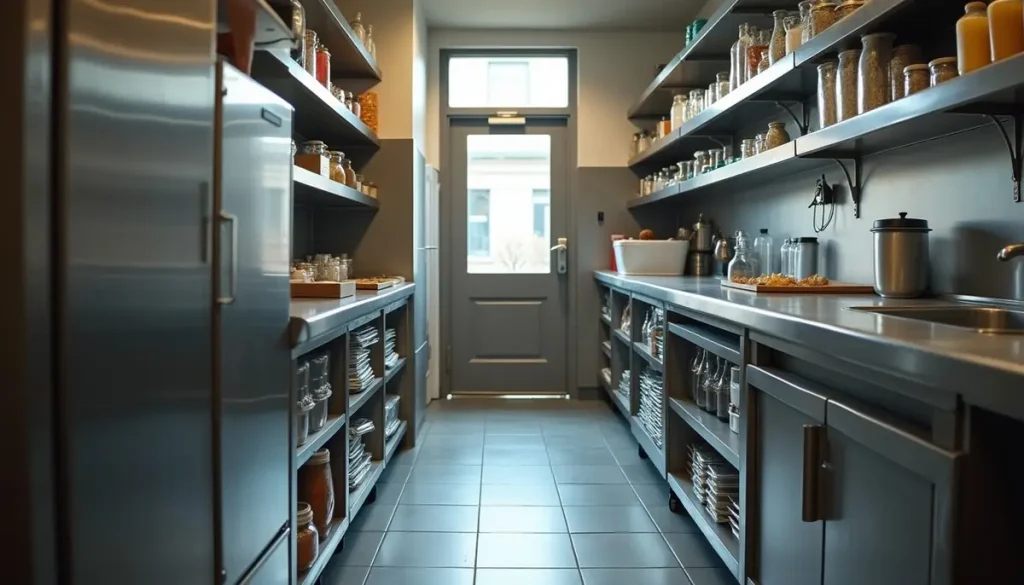
Commercial pest control is ongoing, documented pest management for businesses and institutions, such as restaurants, food plants, warehouses, care homes, schools and apartment buildings, rather than treatment of a private home. Visits are more frequent, and the customer usually needs records that show pests are being controlled. Food businesses work to a legal standard: the FDA Food Code says premises “shall be maintained free of insects, rodents, and other pests”.
What is the difference between commercial and residential pest control?
| Residential | Commercial | |
|---|---|---|
| What the customer is buying | A pest problem solved or kept away | Managed risk: an inspection, an audit, a closure or a complaint |
| Typical frequency | Quarterly for most US homes, monthly under high pressure | Monthly for an office; fortnightly to weekly for food sites |
| Records | Service ticket or invoice | Often a logbook, numbered device map, service reports, trend reporting and corrective actions |
| Who answers for a failure | The household | The operator: in a food business, the permit holder |
| Products | Registered products used to the label | Same rule, plus site limits: in food premises the label must allow that use, bait must be in tamper-resistant stations |
| Who is on site, and when | Technician, on a more flexible schedule | Technician working around trading hours, inspections and kitchen staff |
| Contract | Often annual, higher churn | Longer tenure, frequency and response times written in |
| Price basis | Per visit or per year | Monthly contract priced on frequency and documentation; see commercial pest control costs |
Compiled by The Pest Control Brief from the FDA Food Code 2022 and our own commercial and plan pages. The biology does not change between a house and a restaurant kitchen. What changes is the consequence of a sighting and the proof the customer must be able to show.

“Commercial” has a second, legal meaning
Most searchers mean “pest control for businesses”. Licensing law often means something else: pest control done for hire. Illinois defines a commercial structural pest control business as one that performs or contracts to perform services “on property under the ownership or control of another”, which includes a company treating houses. Federal law is similar: 7 U.S.C. 136(e)(3) calls anyone using restricted use pesticides outside private agricultural production a commercial applicator.
The federal certification category does not separate homes from businesses either. Category (g) in 40 CFR 171.101, industrial, institutional and structural pest control, lists food handling establishments, human dwellings, schools, hospitals, warehouses and grain elevators together. So a licence with the word “commercial” on it proves the holder may work for hire. It does not prove the holder has ever run a food-plant account. Ask for a sample logbook and device map as well.
That also answers what a commercial pest control technician is. Federal law defines a service technician as someone who uses pesticides for structural or lawn pest control “on the property of another for a fee”, with no distinction by building. A noncertified technician may use restricted use products only under a certified applicator’s direct supervision, and must generally be at least 18 under 40 CFR 171.201. State licensing rules go further, so check your state’s register.
What the rules actually require, setting by setting
| Setting | Rule | What it says | Visit count set? |
|---|---|---|---|
| Restaurants and food retail | FDA Food Code 2022, 6-501.111 (model code adopted by states) | Routinely inspect incoming shipments and premises, use control methods if pests are found, eliminate harborage conditions | No: “routinely” |
| Food plants and food warehouses | 21 CFR 117.35(c) | “Pests must not be allowed in any area of a food plant”; “effective measures” to exclude them, including holding areas | No |
| Nursing homes | 42 CFR 483.90(i)(4) | “Maintain an effective pest control program so that the facility is free of pests and rodents” | No |
| Texas schools | Occupations Code 1951.212; 4 TAC 7.201 | Every district adopts an IPM programme and names a coordinator with six hours of training every three years; pest work by a licensed applicator | No, but the state inspects districts at least every five years |
| Illinois schools and day care | 225 ILCS 235/10.2 and 10.3 | IPM “when economically feasible”; written notice at least 2 business days before most applications, with baits excluded | No |
| HUD multifamily and public housing | Notice H 2012-05; PIH 2011-22 | HUD “encourages” an IPM plan; housing authority plans must describe measures to prevent or eradicate infestations | No |
| Audited food sites | SQF Code Edition 9, 11.2.4 (as quoted by Food Safety Tech) | Includes “the identification, location, number, and type of applied pest control/monitoring devices on a site map” | Not in the text we could read |
Compiled by The Pest Control Brief from the named legal texts. This is general information, not compliance advice; confirm the edition and any local additions that apply to your site.
Two things stand out. None of these federal texts sets a number of visits. And the Food Code’s pest sections, 6-501.111 and 6-501.112, do not mention a logbook. The paperwork usually comes from audit schemes, contracts and local inspection practice, and from the plain need to show that “routinely” happened. Requirements vary, so ask your inspector or auditor rather than assuming either way.
Why the records matter so much
Inspection data shows where the exposure sits. Of 26,983 New York City food establishments inspected since January 2024, 12,608, or 46.7 per cent, received at least one pest-related violation, according to our analysis of restaurant pest violations. The top citation, with 19,446 entries, is harborage or conditions conducive to pests. Evidence of mice follows at 10,684, then rats at 2,234. Inspectors are largely writing up conditions, which matches the Food Code’s duty to eliminate harborage.
Hiring a vendor does not move that duty. Under Food Code 8-304.11, the permit holder must comply with the code in order to retain the permit. Audit schemes take the same view: the Safe Quality Food Institute reported pest prevention as “the leading non-conformance” in Edition 9, and warned sites against letting a contractor be the reason for a major or critical finding. A good restaurant pest control file therefore shows what was found, what was done and who fixed the door gap, not only that someone attended.
What do commercial pest control companies use?
Most of the job is monitoring and exclusion, with targeted products behind them. Each item below is tied to a named source.
- Monitoring devices. Snap traps and glue boards, checked and logged. The Northeast IPM Center’s school kitchen guidance calls for “frequent monitoring” and a pest sighting log the technician reviews each visit.
- Rodent bait stations. In a food establishment, bait must be in “a covered, tamper-resistant bait station” (Food Code 7-206.12). Tracking powder pesticides are not allowed there (7-206.13).
- Food-site products. A pesticide’s label must state that use is allowed in a food establishment, and application must prevent contamination of food and equipment (7-202.12).
- Insect light devices. Electrocuting or stunning units must retain the insect and must not sit over a food preparation area (6-202.13).
- Cockroach gel bait and non-repellent products. Used in kitchens because repellent sprays can scatter German cockroaches into new areas.
- Exclusion and sanitation work. Door sweeps, sealed penetrations and drain cleaning, aimed at the conditions behind the top New York City citation.
- Mosquito products. EPA describes larvicides as generally the most effective, least costly stage to target, with adulticides applied as ultra-low volume sprays, typically during disease outbreaks. Choosing a larvicide is “best done by experts”.
Our guide to what IPM actually changes explains the thresholds that sit behind this list.

How often should a business have pest control?
As often as its pest pressure and its inspector or auditor require, since no federal rule above sets a number. These are the working figures by sector, reported by contractors and compiled on our commercial pages.
| Sector | Usual frequency | What drives it |
|---|---|---|
| Small office | Monthly | Low pressure, no food handling |
| Restaurant | Fortnightly to monthly; weekly under active pressure | German cockroaches, rodents, small flies, health inspection |
| Food-grade warehouse, 100,000+ sq ft | Weekly plus audit support | Third-party audit, stored products |
| Nursing home | Not set by the federal rule | The rule’s “effective” programme standard |
| School | Threshold-driven, not calendar-driven | State IPM rules: see schools and childcare |
| Apartment building | Set in the contract, with common areas covered | Shared walls: see apartment and condo pest control |
| Hotel | We found no national rule that sets a count | Bed bugs in guest rooms: see bed bug checks; any kitchen falls under food rules |
What a commercial contract should include
- Pests covered, by name, and what is excluded.
- Service frequency in writing, not only a monthly price, and how a change of frequency is agreed.
- Response time between visits, and whether callbacks are included.
- A numbered device map that matches the log. SQF wording expects location, number and type on a site map.
- A service report after each visit, listing findings, services and recommendations for staff, which is the format the Northeast IPM Center describes.
- Products and labels, with confirmation the label allows use at your type of site.
- Who attends, with state licence number and certification details on file.
- Trend reporting and corrective actions, if an auditor or head office will read them.
- Structural and sanitation recommendations, and who is responsible for acting on them, including the landlord where the lease says so.
- School or housing add-ons: notice periods and posting, where a state rule such as Illinois’ 2 business days applies.
Operators will recognise this as the buyer’s checklist in how commercial contracts are won. Prices by facility type are on our cost page.
Frequently asked questions
What is commercial pest control?
It is recurring, documented pest management for non-household premises such as restaurants, food plants, warehouses, nursing homes, schools and apartment buildings. It relies on routine inspection, monitoring devices, exclusion and targeted products. In licensing law, “commercial” can also mean any pest control done for hire, including work on houses, as Illinois statute defines it.
Is commercial pest control worth it?
For food, care and audited sites, usually yes, because rules such as FDA Food Code 6-501.111 and 42 CFR 483.90 require effective control whoever does the work. For a low-pressure office, it depends. Our cost page puts a small office near $120 a month, so compare that with how often you would otherwise call.
Are commercial landlords responsible for pest control?
Usually the lease decides, so read its maintenance and pest clauses and get any change in writing. In a food business, the FDA Food Code places compliance on the permit holder, and its definition of premises covers property under the permit holder’s control. A restaurant tenant may therefore still be cited for pests whatever the lease says about cost.
Do the big national pest control companies do commercial work?
Many do, and so do local firms. Census data shows three firms with 5,000 or more employees collect 28 per cent of US industry revenue, so national routes are common. Size does not settle suitability: check the state licence, ask for a sample logbook and device map, and ask who will attend your site.
Sources
- US Food and Drug Administration, Food Code 2022: 6-202.13, 6-501.111, 6-501.112, 7-202.12, 7-206.12, 7-206.13, 8-304.11 and the definition of premises.
- 21 CFR 117.35(c), current good manufacturing practice, pest control.
- 42 CFR 483.90(i)(4), requirements for long-term care facilities.
- 7 U.S.C. 136(e) and 136(kk), FIFRA definitions; 40 CFR 171.3, 171.101 and 171.201, certification of pesticide applicators.
- Illinois 225 ILCS 235/3.11; Illinois Department of Public Health, Integrated Pest Management FAQ, on 225 ILCS 235/10.2 and 10.3.
- Texas Occupations Code 1951.212 and 4 Texas Administrative Code 7.201, as reproduced in Texas A&M AgriLife Extension, School IPM rules, 2023.
- US Department of Housing and Urban Development, Notice H 2012-05 and Notice PIH 2011-22.
- Safe Quality Food Institute, “Strengthening food safety: tackling the top non-conformances in SQF Code Edition 9”, 2023; Steven Sklare, Food Safety Tech, 17 March 2021, quoting SQF 11.2.4.
- Northeast IPM Center, School IPM, Indoor Best Practices for Food Service.
- US Environmental Protection Agency, Success in Mosquito Control: An Integrated Approach.
- NYC Department of Health and Mental Hygiene, Restaurant Inspection Results, analysis by The Pest Control Brief, September 2026.
- U.S. Census Bureau, Statistics of U.S. Businesses 2022, NAICS 561710.
- Contractor-reported commercial service frequencies and pricing, as compiled on The Pest Control Brief commercial pages, 2026.