Horse Flies and Deer Flies: Why They Bite So Hard
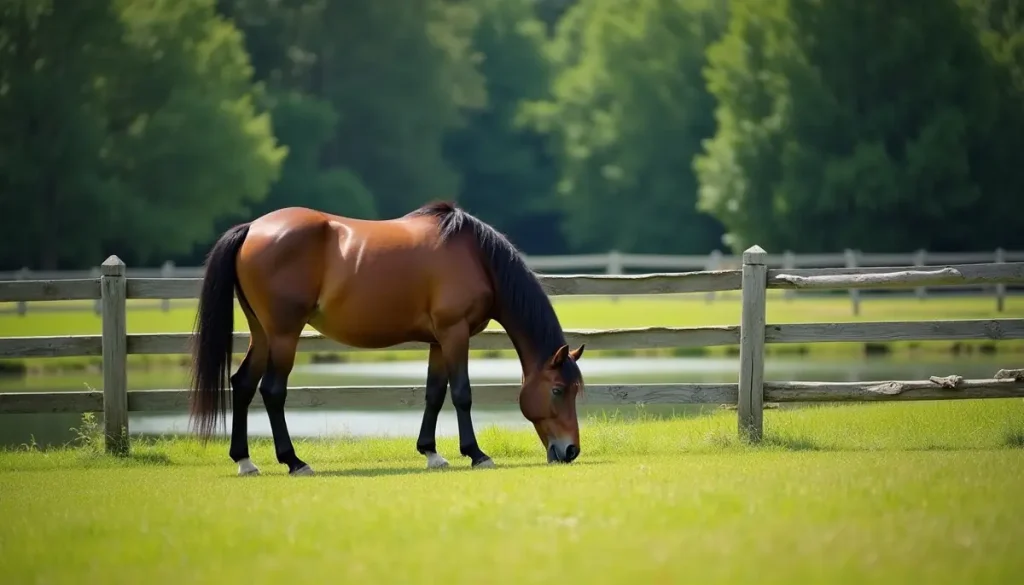
Horse flies and deer flies bite so hard because the females do not pierce the skin like a mosquito: they slice it open with blade-like mouthparts and lap up the pool of blood. Only females bite, because they need blood to develop eggs; males feed on nectar. Both are attracted to large, dark, moving objects, carbon dioxide and warmth, which is why they find you on a trail, a lake or a pool deck. Repellents help only partly, and the most useful defences are timing, covering up and sticky traps that exploit their own behaviour.
Horse flies and deer flies belong to the same family, Tabanidae. NC State University counts about 4,450 described species worldwide and fewer than 400 in the US. They breed in mud and shallow water, which is why bites cluster near ponds, marshes, streams and woodland edges, and why the usual fly advice about bins and sanitation does not apply to them.
Horse fly or deer fly: how to tell them apart
| Horse flies (Tabanus and relatives) | Deer flies (Chrysops) | |
|---|---|---|
| Size | 14 to 19 mm (NC State); 3/4 to 1 1/4 in (Kentucky); the largest species reach 2 in | 10 to 13 mm, slightly larger than a house fly |
| Wings | Usually clear or evenly coloured | Dark bands or patches |
| Eyes | Large, often brightly coloured; solid or striped | Coloured, often spotted |
| Where they bite | Often the legs | Head and neck; they circle the head |
| Peak in US records | August | July, earlier and shorter |
| Who gets bitten | Livestock, other large mammals and people; some of the largest species do not bite people | Commonly bite people |
Sizes differ between sources because the family is large and species vary: NC State gives 14 to 19 mm for horse flies, the University of Kentucky 3/4 to 1 1/4 inches, and the University of Wisconsin notes some species reach two inches. All agree deer flies are the smaller group. The Missouri Department of Conservation describes horse flies as having solid or striped eyes and deer flies as often having spotted eyes.
Why do horse fly bites hurt so much?
Because the bite is a cut, not a puncture. The Missouri Department of Conservation describes the mouthparts as a pair of scalpels that slide back and forth like scissors to make an incision. The University of Kentucky describes knife-like mouthparts that slice the skin so the fly can feed on the blood pool that forms. The University of Wisconsin adds that the females may stab several times, causing considerable bleeding, and lap up the blood with a sponge-like part of the mouth.
A mosquito slips a fine tube into a capillary and can go unnoticed. As NC State puts it, unlike mosquitoes or ticks, you know right away when a horse fly bites you. That pain is also why the flies keep moving: Kentucky notes that the bite usually provokes a reaction, so the fly is forced to move to another host, which makes them intermittent feeders.
Why are horse flies so aggressive?
Because the females need a blood meal to produce eggs, and they are built to wait for it. Males feed on nectar and plant sugars and never bite. Females also take nectar much of the time, but NC State explains that they seek blood when it is time to reproduce, and that summer, when they breed, is when they are most troublesome.
Deer flies in particular are ambush hunters. A University of Florida account of Russell Mizell’s research describes them as waiting for prey to pass rather than searching for it, which makes them highly attracted to movement. Once they have a target, Wisconsin notes, they circle and pursue it until they feed or are killed. Wisconsin also notes that swatting or running when flies are swarming tends to attract more of them, which is the opposite of instinct.

What attracts horse flies to you?
- Movement. Walking, jogging, paddling and swimming all draw them. Kentucky notes horse flies and deer flies can be serious nuisances around swimming pools, attracted by the shiny water surface or the swimmers’ movement.
- Large, dark shapes. NC State says they are drawn to large, dark objects, like horses. This is the basis of every effective trap.
- Carbon dioxide and warmth. Kentucky lists movement, shiny surfaces, carbon dioxide and warmth. NC State describes carbon dioxide as a close-range cue once the fly has spotted a dark shape.
- Height. Mizell’s trap experiments in north Florida, published in Florida Entomologist in 2002, ranked the cues deer flies respond to in this order: height, movement, speed, dimensions, colour, size and contrast. That ranking explains why deer flies go for the top of your head.
One detail surprised us: in Mizell’s trials, adding known tabanid attractants including carbon dioxide, acetone or octenol did not increase catches, and the repellent DEET applied to the trap did not reduce them. For deer flies hunting along a trail, what you look like and how you move appear to matter more than how you smell. That is a real difference from mosquitoes, which home in on breath and skin odour, as our guide to what attracts mosquitoes explains.
When horse flies and deer flies are out: what iNaturalist records show
We measured each group’s share of all US research-grade iNaturalist observations by month, which corrects for the summer rise in people out recording. Both are summer insects, but on different clocks.
- Deer flies peak in July at 490 on our index, nearly five times their average share, after 387 in June. By August they have collapsed to 161. Of all US deer fly records, 75 per cent fall in June and July.
- Horse flies peak a month later, in August, at 348, after 269 in July, and they stay elevated into September at 166 when deer flies have nearly gone.
That matches what extension sources describe from the field: Wisconsin says deer flies are most active in June and July, and Kentucky that deer flies are usually active for specific periods during the summer. In practice, a trail plagued by deer flies in early July can be quiet by mid August, just as horse flies at the lake reach their worst.
Where they breed, and why you cannot remove the source
Kentucky says horse fly and deer fly larvae develop in mud along pond edges or stream banks, wetlands or seepage areas, with females laying batches of 25 to 1,000 eggs on vegetation over water or wet ground. NC State describes egg masses of 200 to 500 eggs that hatch in about a week, larvae that may need a month to a year or more to develop, and pupae that take 1 to 4 weeks. Kentucky puts the larval stage at usually one to three years depending on species.
That life cycle is why there is no equivalent of emptying the bins. Kentucky calls it difficult to impossible to locate or eliminate breeding sites, which are often environmentally sensitive wetlands, and notes the adults are strong fliers that can come from some distance. NC State says treating bogs, marshes and low-lying areas for larvae is impractical. Wisconsin adds that adults do not rest on any surface long enough for residual insecticide treatments to work, and that fogging only kills the flies present at the time.
How to get rid of horse flies and deer flies
You cannot eliminate them near water, but combining a few measures cuts bites.
Traps for horse flies
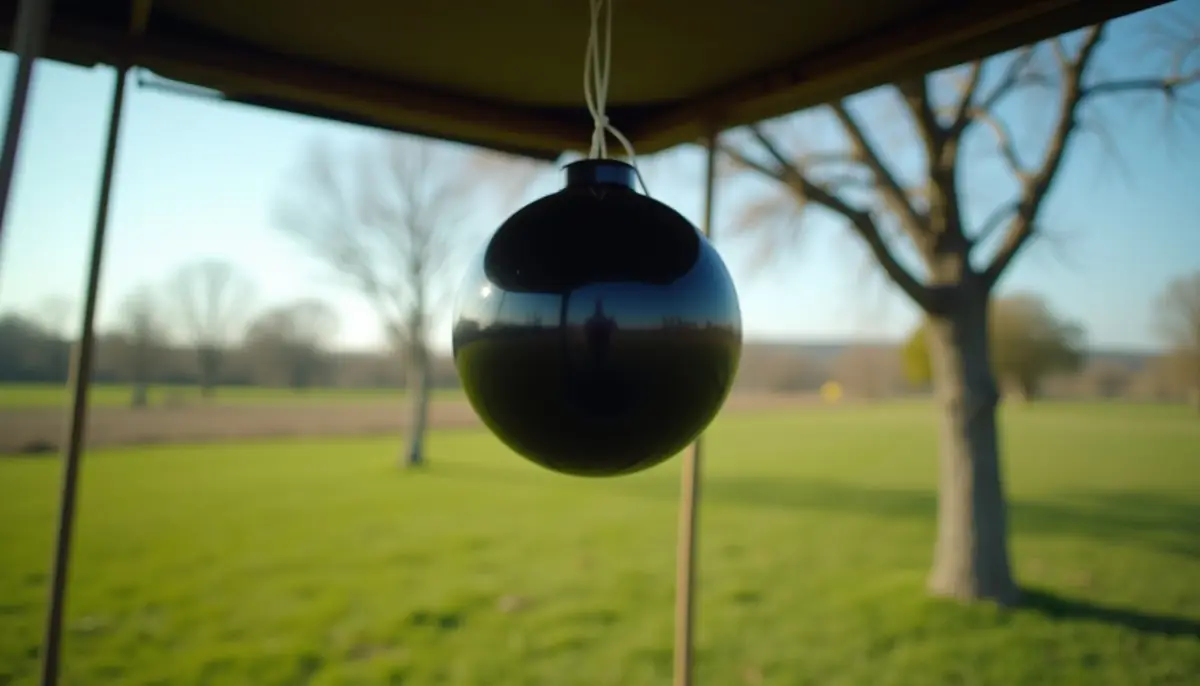
The traps that work all exploit the attraction to large, dark, moving objects. Wisconsin describes the design: a large dark ball, like a beach ball, hanging free so it moves in the wind, under a funnel or clear top. Flies land on the ball, find it is not a meal, fly upward towards the light and are caught. NC State says box traps with shiny black sides, with a shiny black ball of 14 to 16 inches hung beneath, apparently help reduce horse fly numbers in small areas such as home yards and campgrounds, especially where tall vegetation funnels the flies along narrow paths. Keep vegetation low around the trap so the ball is visible. Texas A&M AgriLife says traps have been proven to provide effective control and names box traps and carbon dioxide baited sticky traps.
Sticky patches and blue traps for deer flies
Because deer flies go for the highest moving point, a sticky surface on the back of a hat catches them. In a north Florida field trial published in Florida Entomologist in 2000, James Cilek found adhesive patches on baseball caps caught about 26 per cent of host-seeking deer flies compared with a standard sweep net, with significantly more on patches at the back of the cap than the front, and no difference between black and white caps. NC State describes such hat strips as somewhat effective, and Wisconsin says they reduce the numbers and the bother of flies around the head.
Mizell’s best trap was a 15 cm (6 inch) plastic flowerpot painted bright blue, coated with an insect adhesive and held 1 to 2 metres above the ground, moving at under 3.13 metres per second, about 7 miles per hour. His paper suggests the same idea mounted on a hat or walking stick may reduce attacks over short periods in small areas such as a dooryard.
Repellents and clothing
Repellents help less than people expect. Kentucky says DEET repellents can give several hours of protection and permethrin products, for clothing only, last longer, but notes that the things that attract the flies are still present and they will keep swarming. NC State says repellents give temporary relief but are not extremely effective, and Wisconsin calls standard repellents only marginally effective. Whatever you use, follow the label, including age restrictions.
Clothing does more: long sleeves, long trousers and a hat, light colours rather than dark, and in severe cases a hat with a mesh face and neck veil, as Kentucky suggests. NC State notes a white shirt may help against horse flies, though white can also attract ticks.
Timing and shelter
Horse flies and deer flies bite during the day. Kentucky notes they like sunny areas and usually will not enter barns or deep shade, so shaded routes and early morning or evening walks reduce exposure. For horses and dogs, a shaded, sheltered area gives them somewhere to escape; Wisconsin notes insecticide sprays on animals work poorly because the flies land so briefly. Around pools, Kentucky says plainly that there are no effective recommendations, so the realistic option is to expect them in the peak weeks of July and August; a ball trap elsewhere in the yard may take some flies but has not been tested for pools.
Spraying the yard or hiring a contractor for routine treatment is rarely worth it for tabanids, for the reasons above. If biting flies around the house are small and look like house flies, the culprit is more likely a stable fly, covered in our guide to getting rid of flies outside; if the bites come from insects too small to see near water at dusk, read our guide to no-see-ums.
What happens if a horsefly bites you?
Usually a sharp pain, a small bleeding wound and a raised, itchy welt. Kentucky notes the irritation and swelling usually disappear in a day or so, that scratching can lead to secondary infection, and that in rare instances there may be allergic reactions involving hives and wheezing. Wisconsin adds that some people develop fever, severe sores or allergic responses to the saliva. Spreading redness, signs of infection, or any swelling of the face or difficulty breathing is a reason to see a doctor promptly. Our bite identification guide explains why the mark alone rarely tells you what bit you.
How harmful are horse flies?
For people in the US, mostly painful rather than dangerous. NC State says horse flies are not the major disease vectors that mosquitoes and ticks are and that their bites do not pose a major public health risk. Because their feeding is interrupted, they can carry some pathogens mechanically between hosts. The CDC notes that deer flies have been shown to transmit tularemia in the western United States. Loiasis, a parasitic worm infection spread by deer flies, occurs in the rainforests of West and Central Africa, not the US, according to the CDC. In livestock the picture is more serious: Texas A&M AgriLife lists equine infectious anaemia in horses and anaplasmosis in cattle among the diseases they spread.
They are not all nuisance. NC State points out that horse flies consume a lot of nectar and are valuable pollinators, and Missouri notes the larvae help control the small animals they eat.
Frequently asked questions
Do horse flies bite humans?
Yes, the females do. Female horse flies and deer flies need a blood meal to produce eggs and will bite people as well as cattle, horses, deer and dogs. Males feed only on nectar and never bite. Deer flies bite people commonly, usually around the head and neck. The University of Wisconsin notes that some of the largest horse fly species attack horses and cattle but not people.
What attracts horse flies to you?
Mainly movement and a large, dark shape, then carbon dioxide and warmth at close range. The University of Kentucky lists movement, shiny surfaces, carbon dioxide and warmth. University of Florida trap research found deer flies respond first to height, then movement and speed, which is why they circle the top of your head. Shiny pool water and swimmers also draw them.
Why are they called horse flies?
The name is informal and descriptive: they are notorious pests of horses, cattle and other large grazing animals, which Texas A&M AgriLife lists as the animals they attack, along with other mammals and at times humans. Deer flies are the smaller Chrysops group of the same family, Tabanidae, and also feed on deer and other large mammals, people included.
Do horse fly repellents work?
Only partly. The University of Kentucky says DEET repellents can give several hours of protection and permethrin works on clothing, but the flies keep swarming because what attracts them is still there. NC State calls repellents temporary relief and less effective against horse flies than against mosquitoes or ticks. Covering up, light clothing, hat patches and well-placed traps do more. Follow the product label.
Sources
- University of Kentucky Entomology, ENTFACT-511, Horse Flies and Deer Flies, L. Townsend.
- NC State Extension, Horse Flies and Deer Flies, M. Waldvogel and C. Apperson, 2001, revised 2022.
- NC State University News, How Do Horse Flies Bite? And Are They Dangerous?, M. Shipman, May 2025.
- University of Wisconsin Extension, Garden Facts XHT1049, Deer Flies and Horse Flies, P. Pellitteri, revised 2004.
- Missouri Department of Conservation, Field Guide: Horse and Deer Flies (Tabanids).
- Texas A&M AgriLife Extension, Livestock Veterinary Entomology: Horse Fly.
- Mizell R. F. III, Mizell R. F. IV and Mizell R. A., Trolling: a novel trapping method for Chrysops spp. (Diptera: Tabanidae), Florida Entomologist 85(2), 2002.
- University of Florida IFAS News, Deer Flies a Biting Problem? Oddly, Trolling May Be Just the Ticket.
- Cilek J. E., Evaluation of “TRED-NOT Deerfly Patches” against host-seeking deer flies (Diptera: Tabanidae) in north Florida, Florida Entomologist 83(4), 2000.
- Centers for Disease Control and Prevention, Tularemia: Causes and How It Spreads; Loiasis.
- Purdue Extension E-7, Fly Control Around the Home, and UF/IFAS EENY642, Stable Fly (for comparison sizes).
- The Pest Control Brief analysis of iNaturalist research-grade records, pulled October 2026.