Grasshoppers in the Garden: Identification and Control
Grasshoppers are short-horned, plant-chewing insects, and in US gardens only a handful of species do real damage: the differential, twostriped, redlegged and migratory grasshoppers, plus the eastern lubber in the Southeast. They hatch from egg pods in the soil in late spring, and control works best on young nymphs in May or early June, before they migrate. Once adults arrive, sprays have limited effect, so metal screening, handpicking and poultry are the realistic options.
About 400 grasshopper species are native to North America, and Utah State University Extension notes that only a few cause economic damage. The serious ones behave predictably, which is what makes them manageable. This guide covers identification, the pest species, timing, natural enemies and which controls have evidence behind them.
Grasshopper, cricket or katydid?
All three belong to the order Orthoptera and all three chew, but they live different lives and only one of them is a regular garden pest. The antennae settle it at a glance.
| Grasshopper | Katydid | Field cricket | |
|---|---|---|---|
| Antennae | Short and relatively thick | Thin, as long as the body or longer | Slender, longer than the body |
| Hearing organ | On the first abdominal segment | Slit or patch on each front leg | Not a practical field check |
| Eggs | Pods of 5 to 156 eggs in soil | In plant or grass stems, from a sword or sickle-shaped ovipositor | Laid singly in loose, damp soil, never in pods |
| Moults to adult | Five or six | Generally five | Eight to 11, usually nine |
| Active | Mostly by day | Mostly at night | Lives in burrows; adults appear July and August |
| Garden pest? | Sporadic, severe in outbreak years | Rarely causes significant damage | Occasionally abundant enough to damage seedlings and crops |
The Wisconsin horticulture service points out that katydids are actually more closely related to crickets than to grasshoppers, which is why the old name “long-horned grasshopper” misleads. Crickets that wander indoors are a separate problem, covered in our guide to house and camel crickets; the katydids singing in your trees at night are covered in bugs that make noise at night.
The few species that do the damage
Four members of the genus Melanoplus, the spur-throated grasshoppers, account for most garden and crop injury across the country, according to Utah State and Colorado State extension. In the Southeast, the eastern lubber adds a fifth, and in Florida the American grasshopper is a regular.
| Species | Adult length | Eggs per pod | What extension sources say |
|---|---|---|---|
| Twostriped (M. bivittatus) | 23 to 40 mm (about 0.9 to 1.6 in) | 43 to 135 | Often the most common garden species; migrates in from empty lots and roadsides |
| Differential (M. differentialis) | Males about 30 mm, females about 40 mm | 36 to 156 | Often one of the first to move into gardens; black herringbone bars on the hind leg |
| Redlegged (M. femurrubrum) | 17 to 27 mm (about 0.7 to 1.1 in) | 20 to 29 | Widespread, most abundant on moist sites, hatches late |
| Migratory (M. sanguinipes) | 16 to 27 mm | 5 to 18 | Causes more US crop damage than any other grasshopper; capable of long flights |
| Eastern lubber (Romalea microptera) | 43 to 71 mm (1.7 to 2.8 in), sometimes 89 mm | 25 to 50 | Flightless; Southeast only; damages citrus, vegetables and landscape ornamentals |
| American (Schistocerca americana) | 39 to 55 mm | 75 to 100 | Two generations a year in Florida; adults overwinter |
Sizes and egg counts are from the University of Wyoming species fact sheets and UF/IFAS Featured Creatures. Egg numbers per pod matter more than they look: a single differential female is estimated to make three pods totalling about 250 eggs, while a migratory grasshopper pod can hold fewer than 20.
Life cycle: why timing decides everything
Most US grasshoppers have one generation a year. Females push egg pods into the upper 2 inches of soil in late summer and autumn, choosing dry, undisturbed ground such as ditch banks, roadsides, fencerows and pasture. UC IPM notes that cultivated gardens do not seem to be a common egg-laying site, which is why grasshoppers usually arrive from somewhere else.
The eggs overwinter and hatch as the soil warms in mid to late spring. The tiny nymphs look like wingless adults, and Colorado State says the first few days are critical: cold, wet weather kills newly hatched grasshoppers in large numbers. Survivors moult five or six times over the next several weeks, gaining wing pads, before becoming adults that can live two to three months.
The practical point is simple. Small nymphs are easier to kill than large ones, and adults are very difficult to control, in the words of UC IPM. Colorado State puts the best treatment window in May at lower elevations and early June higher up, aimed at the breeding sites rather than the garden. The number of adults you see in late summer and early autumn is a fair guide to next year’s problem.
When grasshoppers show up: our iNaturalist analysis
We analysed US research-grade iNaturalist records to see when people actually photograph grasshoppers, corrected for how many people are out recording anything that month.
Spur-throated grasshoppers, the Melanoplus pest group, are close to invisible from January to May (an index of 1 to 7) and then climb steeply to a peak of 343 in September, more than three times their usual share of records. All grasshoppers together peak in September at 207. The eastern lubber runs on a completely different clock: it is already at 157 in March, when the black, stripe-backed nymphs emerge in groups, and stays high through June. Gardeners in the Southeast need to act in spring; elsewhere, sightings climb sharply from July.
Katydids and crickets also peak in late summer, which is why August and September evenings get noisy. These are records of sightings, mostly outdoors, not counts of infestations.
What do grasshoppers eat?
Most grasshoppers are general feeders that prefer young, green plants. UC IPM lists lettuce, beans, corn, carrots, onions and some annual flowers as favourites, and Colorado State adds sweet corn. Squash, peas and tomato leaves tend to be avoided. Garden damage is usually limited to a few weeks in early summer, right after range weeds dry up and the grasshoppers move to the nearest green growth.
Lubbers have their own menu. UF/IFAS records at least 100 host plants from 38 families, with peas, lettuce, kale, beans and cabbage preferred, and eggplant, tomato, pepper, okra and sweet corn less favoured. In flower beds they strip amaryllis, crinum, narcissus, canna, lantana and oleander.
Not sure grasshoppers are the culprit? Our garden pest control guide covers the other usual suspects.

What is a grasshopper’s enemy?
Extension sources name a long list:
- Birds: horned larks and kestrels feed heavily on grasshoppers (Colorado State), and short vegetation makes them easier for birds to find (UF/IFAS).
- Blister beetles and bee flies: their larvae develop on grasshopper egg pods in the soil.
- Robber flies, which catch adults in summer, and parasitic flies whose larvae develop inside grasshoppers.
- Disease: the fungus Entomophthora grylli makes infected grasshoppers climb and cling to a stem before they die. Stiff dead grasshoppers stuck to grass tips are the sign.
- A very large nematode, Mermis nigriscens, favoured, like the fungus, by wet weather.
- Coyotes, and in gardens, chickens and guinea hens.
- Weather, which Colorado State ranks as the most important control of all: cold, wet spells just after hatch are very destructive to young nymphs.
That is also the answer to “what is a grasshopper’s purpose”: they turn grass and weeds into food for birds, beetles, flies and mammals.
How to get rid of grasshoppers in the garden
UC IPM calls grasshoppers among the most difficult insect pests to manage in the garden. The table sets out what extension sources and trials support. Our integrated pest management explainer covers the logic of combining them.
| Method | What the evidence says | Best used when |
|---|---|---|
| Handpicking | Works when numbers are low (UC IPM); UF/IFAS calls it the main lubber control | Spring, on young nymphs that cluster |
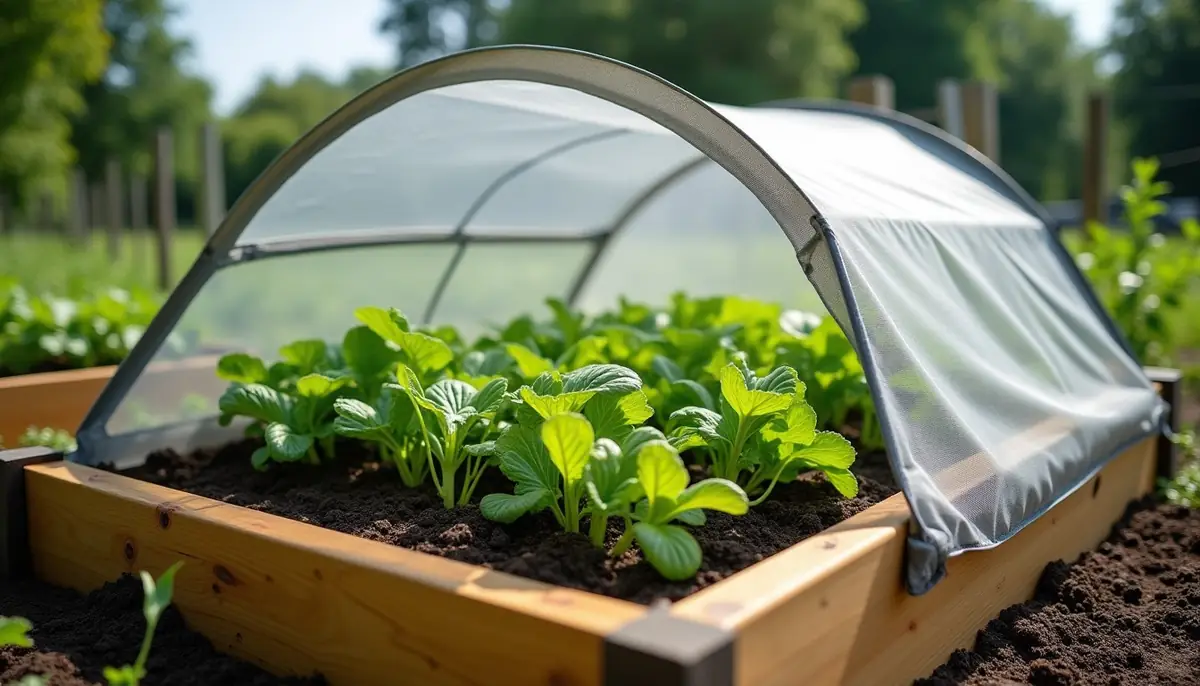
| Screens and row covers | Give some protection; hungry grasshoppers chew through cloth or plastic, so use metal window screening | High-value beds, before adults arrive |
| Chickens or guinea hens | Excellent predators, but they also damage some plants | Larger plots and margins |
| Green trap border | Tall, lush border diverts migrants; never mow it or let it dry | Gardens that get yearly migrations |
| Tilling and mowing | Egg laying favours untilled, dry soil; mown, sparse vegetation exposes grasshoppers to birds | Weedy margins and untilled ground next to the garden |
| Nosema locustae bait | Slow, nymphs only, uneven across species; best for large areas | Large acreage, early season, with neighbours |
| Insecticide bait or spray | Effective on small nymphs at breeding sites; poor on adults; toxic to bees in spray form | Borders and breeding sites before invasion, following the label |
Does Nosema locustae bait work?
Partly, slowly and at scale. Utah State says that under ideal conditions it kills 50 to 70 per cent of the population, but peak mortality comes 4 to 6 weeks after application. A multiyear trial at Maxwell National Wildlife Refuge in New Mexico (Bomar and colleagues, 1993) found densities fell by as much as 50 per cent by the end of the first season, with infections highest 6 to 8 weeks after treatment, and no difference between treated and untreated plots by the third year. UC IPM concludes it is not likely to be effective in home gardens. Colorado State adds that the bait is perishable and should be kept refrigerated.
Insecticides, and when to call for help
Extension guidance favours baits over sprays, placed around the garden edge before grasshoppers invade, because bait forms are less hazardous to bees. Baits lose strength after rain or irrigation and need reapplying while migrations continue. Some products are restricted: since 1 August 2020, carbaryl is a restricted-use material in California and needs an applicator licence. Follow the label for the crop you are treating. If the damage is in the lawn rather than the vegetable bed, read it first with our lawn pest control guide. Where grasshoppers come from land you do not control, Colorado State says a coordinated community effort is often much more successful.
The federal programme, and why it will not treat your garden
USDA APHIS runs grasshopper suppression on rangeland in 17 western states, where it counts nearly 400 species and about 12 pests, but it has no authority to treat private cropland. Utah State notes that cooperative programmes are considered only above 8 grasshoppers per square yard over at least 10,000 contiguous acres. For a home garden, the help available is your county extension office.
Do grasshoppers bite, and are they dangerous?
Grasshoppers have chewing mouthparts built for leaves, and none of the extension sources we read treats them as a biting pest of people or a disease risk. Their defences are aimed at predators: grasshoppers regurgitate gut fluid when squeezed, and a 2022 Texas A&M study of a Schistocerca grasshopper found that pressure on the thorax triggered it most often, describing regurgitation as a defence that can carry noxious plant chemicals. The eastern lubber goes further, hissing and secreting a foul-smelling froth from its breathing pores that it can spray at least 0.6 inches, and its chemicals affect many vertebrate predators. It is sensible to keep pets from eating lubbers, and if anyone has a skin reaction after handling one, ask a doctor.
The real damage indoors is to screens. UF/IFAS notes that American grasshoppers climb pool enclosures and house walls and chew holes in fibreglass screening, which is expensive to replace.
Where lubbers live: the state picture
UF/IFAS gives the eastern lubber’s range as North Carolina to central Texas. Our data agrees and shows how concentrated it is: Florida alone accounts for 25,417 of about 33,500 US records, roughly three quarters, at 45.3 records per 10,000 observations. Louisiana (31.9) and Mississippi (22.4) follow. North of Tennessee the records are a handful of strays.
What are 5 interesting facts about grasshoppers?
- Their hearing organ, the tympanum, sits on the first abdominal segment rather than the head; katydids hear through their front legs.
- Migrating adults can fly 15 or more miles a day in large swarms, according to UC IPM.
- Severe outbreaks usually come every 8 to 10 years and can last two or three years.
- The eastern lubber cannot fly and is a poor jumper, so it mostly walks; its egg stage lasts 6 to 8 months.
- A fungal disease makes infected grasshoppers climb to the top of a stem and die clinging there.
Whether grasshoppers are good luck is folklore rather than biology; what biology says is that most are harmless and a few are pests.
Frequently asked questions
Should I get rid of grasshoppers?
Only when they are damaging plants you care about. Most of the roughly 400 North American species never cause economic harm, and they feed birds and other wildlife. If a few are chewing lettuce or beans, handpicking and screens are enough. If large numbers arrive every summer, treat young nymphs at their breeding sites in late spring, ideally with neighbours, because adults are very hard to control.
Is grasshopper good or bad?
Both, depending on the species and the year. They feed birds, blister beetle larvae, robber flies and coyotes. A few species, mainly the twostriped, differential, redlegged and migratory grasshoppers and the eastern lubber, can strip gardens and crops in outbreak years. Outbreaks are usually driven by weather and tend to come every 8 to 10 years.
Why are there grasshoppers in my house?
Usually by accident. Grasshoppers lay eggs only in soil, so they cannot breed indoors. They regulate their temperature by climbing, and UF/IFAS notes that when numbers are high they climb house walls and pool enclosures and can chew holes in fibreglass screens. A grasshopper indoors has almost always come in through a door, a window or a damaged screen and can simply be put outside.
When is the best time to kill grasshoppers?
In spring, while they are small nymphs. Colorado State puts the window in May at lower elevations and early June at higher ones, with treatment aimed at the egg beds and margins where they hatch. In the Southeast, lubber nymphs emerge earlier, and our iNaturalist data shows sightings already high in March. Once adults migrate into the garden, sprays have limited effect.
Sources
- University of California Statewide IPM Program, Pest Notes: Grasshoppers, UC ANR Publication 74103 (M. L. Flint).
- Colorado State University Extension, Fact Sheet 5.536, Grasshopper Control in Gardens and Small Acreages (Cranshaw and Hammon).
- Utah State University Extension, Grasshoppers (pest research page).
- UF/IFAS Featured Creatures EENY-006, Eastern Lubber Grasshopper, Romalea microptera (Saracino and Leppla, revised 2025).
- UF/IFAS Gardening Solutions, Eastern Lubber Grasshoppers.
- UF/IFAS Featured Creatures EENY-004, American Grasshopper, Schistocerca americana; UF/IFAS Vegetable Arthropod Pest Photographs CD-ROM II, American grasshopper.
- University of Wyoming, Grasshoppers of Wyoming and the West: species fact sheets for Melanoplus bivittatus, M. differentialis, M. femurrubrum, M. sanguinipes, Dissosteira carolina and Brachystola magna.
- University of Wisconsin Extension, Wisconsin Horticulture: Katydids.
- University of Michigan BioKIDS, Acrididae (grasshoppers).
- USDA APHIS, Frequently Asked Questions About Grasshoppers and Mormon Crickets in Western States.
- Bomar, Lockwood, Pomerinke and French, Multiyear evaluation of the effects of Nosema locustae on rangeland grasshopper communities, Environmental Entomology 22: 489 to 497, 1993.
- Medina-Duran and colleagues, regurgitation as an antipredator behaviour in Schistocerca, Journal of Insect Behavior, 2022.
- The Pest Control Brief analysis of iNaturalist research-grade records, pulled October 2026.