Screwworm Returns After 60 Years: What Owners Should Know
The US was free of it from 1966 until June 3, 2026. CDC rates the current public risk very low. What to watch for on animals, and why wounds are the whole story.
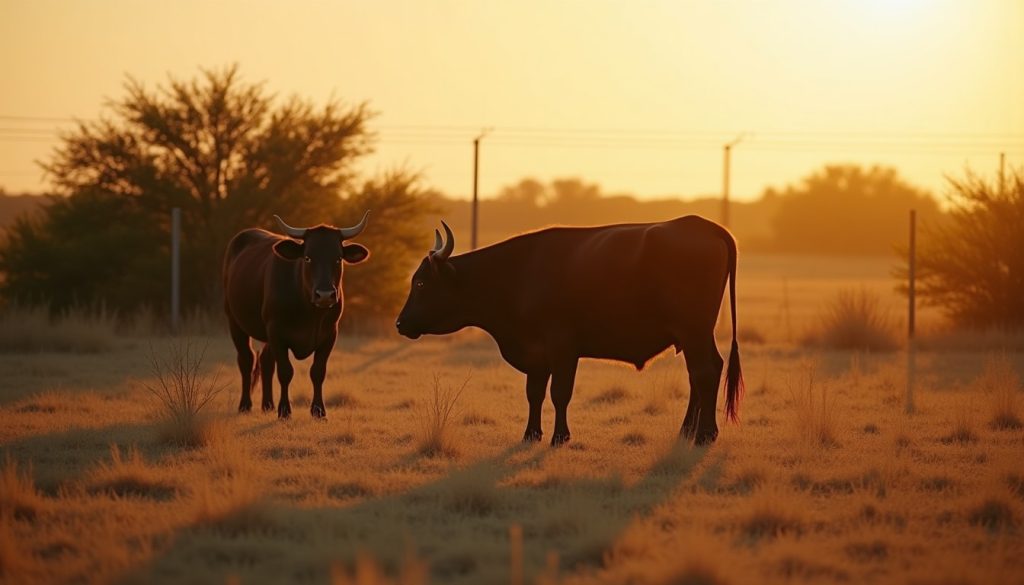
The United States was free of New World screwworm for 60 years, from 1966 until June 3, 2026, when USDA confirmed larvae in a three-week-old calf in Zavala County, Texas. The CDC’s assessment is that the current risk to the public and to animals in the United States is very low. There has been no locally acquired human case in this outbreak. What makes this fly different from an ordinary nuisance is that its larvae feed on living tissue rather than dead.
This is a livestock and animal health story that has been covered almost entirely in agricultural and veterinary press. It reaches property owners through a narrow but real channel: any warm-blooded animal with an open wound, including pets, can be affected, and the response from an owner is straightforward if they know what to look for.
What it is
New World screwworm is a parasitic fly whose larvae complete part of their life cycle by feeding on the tissue of living, warm-blooded animals and, occasionally, people. Adults are metallic blue with three stripes on the thorax and orange eyes, and mature larvae reach about 17 mm, with the spiral ridges that give the insect its name.
Most flies that lay eggs in animals go for dead tissue. This one starts at the edges of an open wound and works into healthy tissue, which is why an untreated infestation in an animal gets worse rather than resolving.
The eradication that held for 60 years
The fly was present in the southwestern United States since at least 1842 and became a serious problem in the southeast from 1933. The solution was the sterile insect technique, in which sterilised male flies are released in large numbers; females mate only once, so mating with a sterile male produces eggs that never hatch.
| Period | Event |
|---|---|
| 1951 | First test of the sterile insect technique, in Florida |
| 1959 | Southeast eradication achieved, after about $10 million of investment |
| 1962 to 1966 | Southwest programme, costing about $32 million, declared a success in 1966 |
| 1986 | Barrier zone pushed south to Mexico’s southern border |
| 2016 to 2017 | Re-emergence in endangered Key deer in the Florida Keys, eradicated by early 2017 |
By the mid-1970s the benefit of eradication to producers was estimated at $200 million a year, and by 1996 at $796 million a year directly and $2.8 billion across the wider economy.
The current outbreak
The barrier began failing in 2023, when Panama and Costa Rica identified an outbreak. Panama went from an average of about 25 cases a year to more than 6,500 in a single year. Every Central American country and Mexico has since confirmed cases in animals and people. Regionally, the CDC reported more than 209,400 animal cases and more than 2,500 human cases as of August 2026.
Confirmed US detections began in June 2026:
- June 3, 2026, Zavala County, Texas. Larvae in the umbilical area of a three-week-old calf. The first US animal case since eradication.
- A second Zavala County case in a month-old calf, about 5.6 miles from the first.
- June 8, 2026, La Salle County, Texas. A calf.
- June 8, 2026, Lea County, New Mexico. A dog, and the first New Mexico case. This one was initially announced as a Texas county because the reporting veterinarian was there, and was later reclassified; early reports indicated the dog had recently been in Mexico.
Detections have continued in additional Texas counties since. The Texas Animal Health Commission reported 17 counties and 39 premises as of September 2026. Because the position changes twice a week, the USDA APHIS confirmed detections dashboard is the place to check a current figure rather than any article, including this one.
One human case has been reported in the United States during this outbreak, in August 2025, in a traveller returning from El Salvador. There has been no locally acquired human infection.
The response
Movement restrictions apply within designated infested zones, where warm-blooded animals cannot leave without authorisation from the state animal health authority. Zones are added and released as the situation changes; several Texas zones were released at the end of August 2026.
The federal response rests on rebuilding sterile fly capacity. A sterile fly dispersal facility at Moore Air Base near Edinburg, Texas was completed in February 2026 at a cost of $8.5 million, with capacity to release 100 million sterile flies a week. Construction of a production facility on the same site began in April 2026, targeting 100 million flies a week by late 2027 and 300 million a week by the end of 2028. Until then, the only production facility operating in North America is the joint Panama and United States plant.
Livestock import ports have been closed and reopened in stages, with Douglas, Arizona reopening to Mexican cattle in August 2026 while other crossings stayed shut.
What an animal owner should actually do
The practical guidance is short, and it is about wounds rather than about spraying anything.
- Check animals with open wounds, including after surgery, castration, dehorning, branding, or in newborns at the navel. Wounds are where the fly lays eggs.
- Clean and cover wounds on animals and on yourself.
- Look for draining wounds, maggots, egg masses, discomfort and lesions around body openings. A wound that smells foul and appears to be enlarging rather than healing is the warning sign.
- Report suspected cases immediately to your state animal health official and to USDA. This is a reportable condition, not something to treat quietly.
- For a person, contact a healthcare provider and do not try to remove larvae yourself.
Pet owners in the affected region should treat it as a wound care issue: keep cuts clean and covered, and have anything that looks infested seen by a veterinarian rather than a pest control company. This sits outside the structural pest control trade entirely, which is worth stating plainly given how much marketing follows any pest story. Our guide to what pest control covers explains where the trade’s scope ends, and what counts as an emergency covers triage for the things it does handle.
What a return would cost
USDA has modelled the economics by adjusting the 1976 Texas outbreak to 2024 dollars. In that outbreak, 1,488,256 cattle and 332,600 sheep and goats were infested, and producers spent $132.1 million that year. Scaled to today, USDA projects that an outbreak of that size could cost Texas producers $732 million a year and the Texas economy $1.8 billion.
That figure is a projection of a scenario, not a measurement of current losses, and USDA itself notes that comparisons more than 40 years after eradication are difficult. It is the strongest available argument for the scale of the sterile fly investment, and it should be quoted as what it is.
Frequently asked questions
Is screwworm in the United States right now?
Yes, in animals. USDA confirmed the first case since eradication on June 3, 2026 in a calf in Zavala County, Texas, followed by further cases in Texas and a dog in Lea County, New Mexico. The Texas Animal Health Commission reported 17 counties and 39 premises as of September 2026. USDA updates a confirmed detections dashboard twice weekly.
Can screwworm infect humans?
It can, but the CDC assesses the current risk to the US public as very low. One US case has been reported in this outbreak, in August 2025, in a traveller returning from El Salvador. There has been no locally acquired human case in the United States. Regionally, more than 2,500 human cases have been reported.
Can dogs get screwworm?
Yes. The first New Mexico case was a dog. Any warm-blooded animal with an open wound can be affected. Keep wounds clean and covered, and have a veterinarian look at any wound containing maggots or one that is enlarging and smells foul.
What does a screwworm infestation look like?
A wound that gets worse instead of healing, often with visible larvae, egg masses at the wound edge, drainage, a foul smell, and evident discomfort in the animal. Newborn animals are frequently affected at the navel, and the umbilical area was where the first US case was found.
How did screwworm get back into the US?
Through northward spread from an outbreak identified in Panama and Costa Rica in 2023, which moved through Central America and Mexico over the following years before reaching the Texas border region in 2026. Animal movement is the main vector, which is why import restrictions and movement controls form much of the response.
What are sterile flies and how do they stop screwworm?
Sterilised male flies are reared and released in large numbers. Female screwworms mate only once, so a female that mates with a sterile male lays eggs that never hatch. Sustained releases collapse the population. This is the method that eradicated the fly from the US by 1966.
Is screwworm treatable in animals?
Yes, and it is a veterinary matter. Suspected cases should be reported immediately to a state animal health official and USDA, and treated under veterinary direction. Do not attempt to remove larvae from a person; contact a healthcare provider instead.
Sources
- USDA APHIS, USDA Confirms Presence of New World Screwworm in the United States, June 2026. aphis.usda.gov
- USDA APHIS, Confirmed Detections of New World Screwworm. aphis.usda.gov
- U.S. Centers for Disease Control and Prevention, New World Screwworm Situation Summary, August 2026. cdc.gov
- U.S. Centers for Disease Control and Prevention, About New World Screwworm. cdc.gov
- USDA APHIS, New World Screwworm Ready Reference Guide, Historical Economic Impact, January 2025. aphis.usda.gov
- USDA, Completion of Sterile Fly Dispersal Facility in Texas, February 2026. usda.gov
- Texas Animal Health Commission, New World Screwworm. tahc.texas.gov
- Texas A&M AgriLife Extension, New World Screwworm Fact Sheet. agrilifeextension.tamu.edu