Bed Bug Pest Control: What Professional Treatment Involves
Professional bed bug pest control works in most homes, but almost never in a single visit: a licensed firm confirms the bugs, treats with heat or insecticides plus dusts, steam and encasements, then returns about every two weeks until traps stay empty. Heat can finish the killing in one day; chemical jobs usually take two or three visits. Rutgers field trials show the size of the starting population predicts success more than the method. The job is finished when monitors catch nothing for weeks, not when the technician leaves.
The job, visit by visit
| Stage | Timing | What the technician does | What you do | What counts as progress |
|---|---|---|---|---|
| Inspection | Day 0 | Checks seams, frames, sofas and baseboards; sets interceptor cups; may bring a detection dog | Keep the bug you caught; leave the bed made so evidence is not disturbed | A confirmed identification and a written plan |
| Preparation | Before treatment | Gives a written prep list | Launder and dry bedding, declutter, pull furniture from walls as the list says | Rooms the crew can reach |
| Treatment 1 | Day 1 | Heat the rooms, or apply insecticide to seams and crevices, dust to voids, steam, fit encasements | Stay out for the time on the label or the heat crew’s instructions | Live bugs fall sharply |
| Follow-up 2 | About day 14 | Checks traps, re-treats where bugs or newly hatched nymphs turn up | Keep encasements zipped and traps in place | Lower trap counts |
| Follow-up 3 | About day 28 | Re-treats if needed, or moves to monitoring | Report any new bites or sightings | Empty traps |
| Monitoring | Weeks to months | Checks interceptors every two weeks | Keep checking yourself | Empty traps for eight weeks |
Kentucky entomologist Michael Potter notes that a thorough inspection and treatment may take up to several hours, and that follow-ups are usually needed. Prices for each method are on our bed bug treatment cost page, which puts chemical work at $150 to $400 per room and whole-home heat at $3,000 to $6,000.
Visit one: proving it is bed bugs
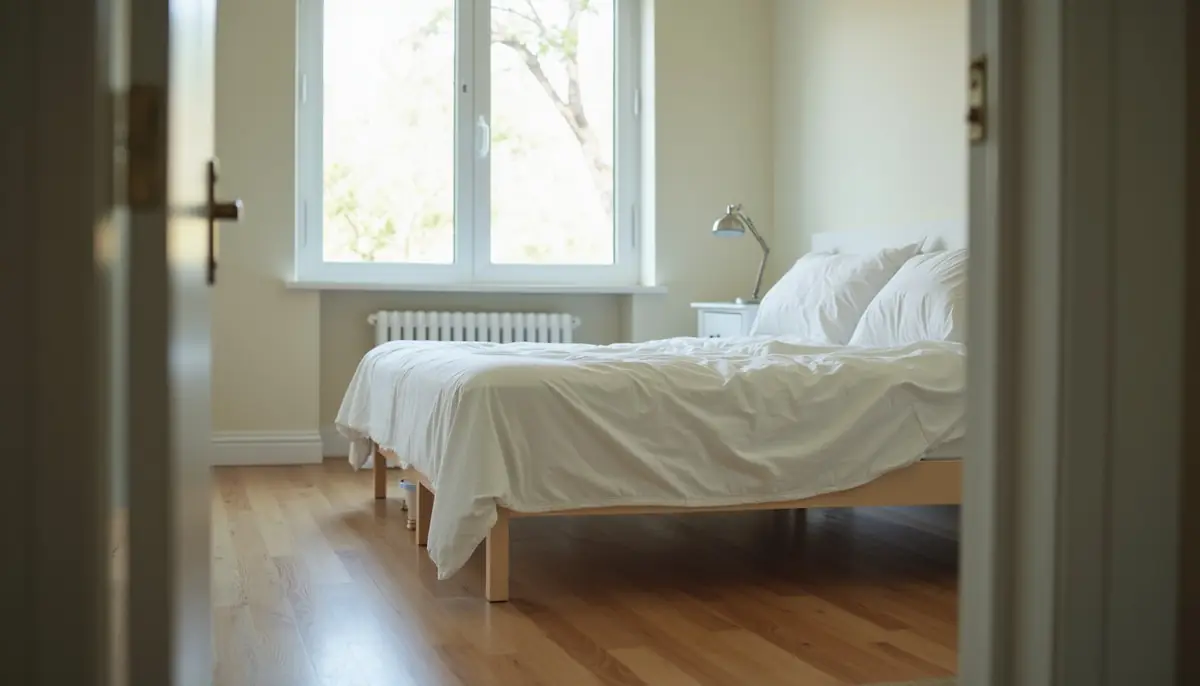
A good firm will not quote blind. Utah’s Department of Health tells residents to expect an inspection before any quote or pesticide, and a written report. The evidence the technician looks for is described in our bed bug identification guide; if all you have is a single insect, read found one bed bug before booking a full treatment.
| Detection method | Share of infestations found | Study conditions |
|---|---|---|
| Brief visual inspection | 72 per cent | 2,372 New Jersey apartments (Wang and others, 2016) |
| Interceptor cups under furniture legs | 89 per cent | Same buildings and study |
| Trained dogs, controlled tests | 97.5 per cent, no false positives | Bugs in vented containers (Pfiester and others, University of Florida, 2008) |
| Trained dogs, real apartments | 44 per cent on average, range 10 to 100; 15 per cent false positives | 11 dog teams in naturally infested apartments (Cooper, Wang and Singh, Rutgers, 2014) |
Compiled by The Pest Control Brief from the named studies.
The gap between the two dog rows is the point. Every handler in the Rutgers study believed their dog found at least 95 per cent of infestations, and neither experience nor certification predicted accuracy. UC IPM’s advice is to verify third-party certification and training before hiring a canine team. An alert with no visible evidence is a reason to set traps, not proof.
Is heat or chemical treatment better for bed bugs?
Heat kills every stage in one session; insecticides leave a residue that keeps working after the visit. Many firms combine them. The choice turns on what each one misses.
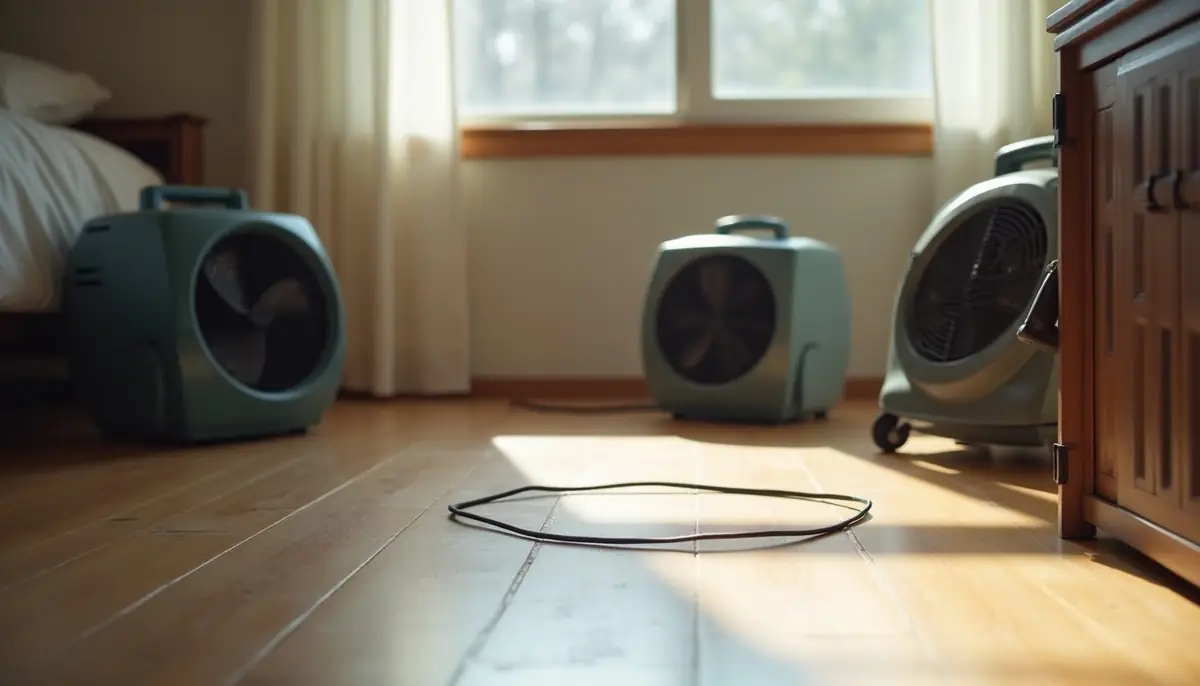
UC IPM Pest Note 7454 gives the commercial standard: at least 140°F for two hours or 130°F for three hours, against a minimum lethal temperature of 113°F. Kentucky describes crews heating the air to about 120 to 130°F with portable heaters and fans. The hold time exists because eggs are tougher than adults. In University of Minnesota trials by Kells and Goblirsch (2011), adults held at 45°C (113°F) died within 94.8 minutes, but eggs survived seven hours at that temperature and needed 71.5 minutes at 48°C (118°F). Heat leaves no residual protection if bugs are brought back in.
| Method | Kills eggs | Lasting effect | Main limitation |
|---|---|---|---|
| Whole-room heat | Yes, if every spot reaches target | None | Cool spots inside furniture and walls |
| Residual insecticide | Partly: a direct dinotefuran spray killed 91 per cent of eggs in a Rutgers lab test | Yes | Pyrethroid resistance is common (UC IPM) |
| Silica gel or diatomaceous earth dust | Acts on bugs that crawl through it | Yes, in voids and under baseboards | EPA notes desiccants may take several months |
| Steam | Yes, on contact | None | Limited penetration of fabric (Kentucky); EPA says at least 130°F |
| Mattress and box spring encasements | Bugs inside starve | Yes, while intact | Do not stop bugs climbing on from outside |
| Sulfuryl fluoride fumigation | Yes | None | Building vacated for days; UC IPM calls it remedial only |
Compiled by The Pest Control Brief from UC IPM 7454, University of Kentucky ENTFACT-636 and EPA.
Insecticide work is targeted, not a room fog. Kentucky says companies treat seams, folds and crevices of beds and sofas but usually will not spray the sleep surface. Products must be used as the label directs, and any firm should tell you the active ingredient and the re-entry time on that label.
How many treatments does it take to get rid of bed bugs?
Plan for two or three. Utah’s health department says to expect at least two treatment visits plus a third follow-up visit to confirm elimination, with more for severe infestations or cluttered homes. The two-week spacing follows the egg: a residual spray kills what is active, and the next cohort hatches over the following days, so the second visit catches them before they mature. In the Rutgers community program (Cooper, Wang and Singh, 2016), apartments were treated every two weeks until no bed bugs were detected at three biweekly monitoring visits in a row.
Does bed bug pest control work? What the field trials show
It works reliably on small infestations and less reliably on large ones. In a 2013 Rutgers trial in nine low-income apartments, an integrated program cut bed bug numbers by 96.8 per cent on average over six months, but full elimination came only in the three apartments that started with fewer than 30 bugs. A later Rutgers trial in 32 apartments eliminated bugs in 86 to 100 per cent of units within 28 weeks of fortnightly visits, with the lightest infestations clearing even without insecticide. At community scale, the 2016 program cut counts by 98 per cent and the infestation rate from 15 to 2.2 per cent in a year.
The practical reading: call early. Every week of delay adds bugs, and the starting count is the best predictor in these studies of whether a job ends in elimination or in reduction.
How do I prepare for bed bug treatment?
Follow the firm’s written list, because preparation varies with the method and the size of the problem. Kentucky says extensive preparation may be needed when bugs are dispersed, while little or none may suffice for light infestations, and that some firms want beds stripped and furniture moved before they arrive.
- Launder bedding and clothing from infested rooms at 120°F or hotter, or run them through a dryer on medium to high heat for 10 to 20 minutes (Kentucky).
- Bag clean items in sealed plastic so they are not reinfested. EPA says items that cannot be treated can stay sealed for up to a year.
- Reduce clutter around beds and sofas so the technician can reach seams and baseboards.
- Do not discard beds unless the firm advises it. Kentucky says infested mattresses need not be discarded, and encasing them is often cheaper.
- Do not try to heat the house yourself. EPA warns that raising the thermostat, using a propane heater or a fireplace does not work and is dangerous.
Apartments and shared walls
Treating one unit in a building often fails because bugs move. Rutgers researchers marked bed bugs in six apartments and recovered marked bugs in neighbouring units next to five of them within a month. In a survey of 2,372 New Jersey apartments, 12.3 per cent were infested and 49 per cent of those residents did not know. Kentucky advises inspecting units next to any known infestation and, for managed buildings, routine building-wide inspections. Our guide to how bed bugs spread covers the routes between units.
Getting rid of bed bugs without calling pest control
It is realistic only for a very small, early infestation in a detached home. In the 2017 Rutgers trial, apartments with 1 to 12 bugs were cleared using only non-chemical methods (steam, encasements, laundering, decluttering and interceptors), and in a 2016 Rutgers study traps alone cleared most low-level infestations within 22 weeks. Those results came from fortnightly visits by trained researchers. Kentucky notes that most householder bed bug sprays have limited effect once dry. EPA’s own do-it-yourself guidance says treatment can take weeks to months, freezing works only at 0°F for three days, and checking should continue for at least a year. Call a licensed professional if bugs are in more than one room, you share walls, or traps keep catching after two checks.
How you know it has worked
Interceptor counts, not the absence of bites. Kentucky describes interceptors as useful for determining whether an infestation has been eliminated, and in the Rutgers trials elimination meant zero trap catch for eight consecutive weeks with nothing found on visual inspection. Ask the firm in writing which test it uses to close the job and what happens if bugs reappear inside the warranty period.
Frequently asked questions
How long does it take to get rid of bed bugs with pest control?
A heat treatment kills bugs in one day, but confirming the result takes weeks of monitoring. Chemical programs usually run two or three visits about two weeks apart. In Rutgers field trials, most apartments were cleared within 22 to 28 weeks of fortnightly visits, and heavily infested ones took longest or were not fully cleared.
How do pest control get rid of bed bugs in the UK?
Many UK councils use an insecticide spray over two visits. Haringey Council, for example, sprays affected rooms, returns to check progress and spray again, asks residents to stay out for two hours after the spray dries, and says not to vacuum between visits or for up to four weeks after the last one. Private firms may also offer heat.
Do I need to throw away my mattress?
Usually not. University of Kentucky guidance says infested beds need not be discarded, although sometimes it may be advisable, and that encasing the mattress and box spring is often the more economical option. Bugs sealed inside an intact encasement eventually die. If you do discard a bed, wrap or bag it first so bugs are not shed on the way out.
Can a dog inspection replace traps?
Not on current evidence. Trained dogs found 97.5 per cent of bed bug samples in a controlled University of Florida test, but 11 teams in real New Jersey apartments found 44 per cent on average, with 15 per cent false positives. Interceptor cups found 89 per cent of infestations in a separate Rutgers survey.
Sources
- University of California Statewide IPM Program, Pest Notes: Bed Bugs, UC ANR Publication 7454 (Sutherland, Choe and Lewis), 2013.
- University of Kentucky Entomology, ENTFACT-636, Bed Bugs (M. F. Potter), revised 2026.
- US Environmental Protection Agency, Do-it-yourself Bed Bug Control.
- Utah Department of Health and Human Services, Bed bug pest control.
- Kells, S. A. and Goblirsch, M. J., Temperature and time requirements for controlling bed bugs under commercial heat treatment conditions, Insects 2(3), 2011.
- Cooper, R., Wang, C. and Singh, N., Accuracy of trained canines for detecting bed bugs, Journal of Economic Entomology 107(6), 2014.
- Pfiester, M., Koehler, P. G. and Pereira, R. M., Ability of bed bug-detecting canines to locate live bed bugs and viable bed bug eggs, Journal of Economic Entomology 101(4), 2008.
- Wang, C., Singh, N., Zha, C. and Cooper, R., Bed bugs: prevalence in low-income communities, resident’s reactions, and implementation of a low-cost inspection protocol, Journal of Medical Entomology 53(3), 2016.
- Singh, N., Wang, C. and Cooper, R., Effectiveness of a reduced-risk insecticide based bed bug management program in low-income housing, Insects 4(4), 2013.
- Cooper, R. A., Wang, C. and Singh, N., Evaluation of a model community-wide bed bug management program in affordable housing, Pest Management Science 72(1), 2016.
- Cooper, R., Wang, C. and Singh, N., Effects of various interventions, including mass trapping with passive pitfall traps, on low-level bed bug populations in apartments, Journal of Economic Entomology 109(2), 2016.
- Singh, N., Wang, C., Zha, C., Cooper, R. and Robson, M., Testing a threshold-based bed bug management approach in apartment buildings, Insects 8(3), 2017.
- Abbar, S., Wang, C. and Cooper, R., Evaluation of a non-chemical compared to a non-chemical plus silica gel approach to bed bug management, Insects 11(7), 2020.
- Cooper, R., Wang, C. and Singh, N., Mark-release-recapture reveals extensive movement of bed bugs within and between apartments, PLoS ONE, 2015.
- Haringey Council, Bed bugs pest control.