Pest Control Without a Contract: Costs and Trade-Offs
One-time visits cost $100 to $300 against $400 to $950 for an annual plan. The per-visit gap is route economics, not a loyalty discount.
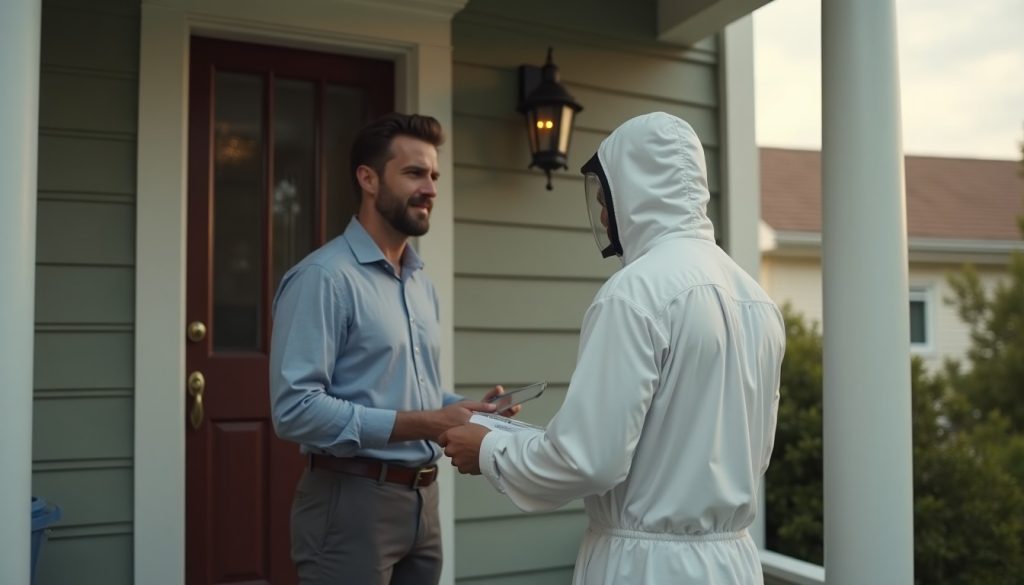
You can buy pest control without a contract, and a one-time treatment costs $100 to $300 for most visits, with standard jobs running $250 to $400. An annual plan of four to six visits averages $400 to $950. The per-visit price on a recurring plan is reported at 40 to 60% below a standalone call, which is route economics rather than a loyalty discount.
Contract-free service is widely searched and rarely explained honestly, because most pages covering it are written by companies selling plans. The decision comes down to a straightforward comparison and two contract terms most people never check.
What each option costs
| Option | Cost | What you get |
|---|---|---|
| One-time visit | $100 to $300 typical, $250 to $400 standard job | Single treatment, follow-ups charged separately |
| Monthly plan | $40 to $70 per visit | Recurring, callbacks usually included |
| Quarterly plan | $100 to $300 per visit | Four visits a year |
| Annual plan | $400 to $950 for 4 to 6 visits | Warranty and guaranteed re-treatment |
Contractor-reported ranges compiled in 2026. There is no federal price index for pest control services, covered in our analysis of where pest control money goes.
Why plans price lower per visit
The per-visit gap of 40 to 60% is real and it is not generosity. On a recurring route your property sits between other scheduled stops, so the drive time is shared across several customers. A one-off call carries the entire journey.
The arithmetic behind it is public. Each technician needs to generate roughly $560 of revenue per working day at industry-average productivity, and payroll consumes 36% of revenue. A route delivering 8 stops a day at $70 clears that. A single call across town does not, so it is priced accordingly. Our guide to how services are priced works through it.
That means the plan discount is structural, and it is not usually negotiable down to plan pricing for one-off work.
When contract-free genuinely makes sense
- A single, identifiable problem that is resolved: one wasp nest, one rodent entry, one swarm.
- Low regional pest pressure. A northern market with a short season and no history of activity.
- You would spot activity yourself and prefer to call when you see it.
- You are selling or moving soon and a multi-year agreement has no value to you.
- The pest you have is excluded from plans anyway, which applies to termites, bed bugs and wildlife in most general agreements.
Four one-off visits a year at $200 each is $800, against a quarterly plan around $550. If you would genuinely only call once or twice, one-off wins. If you would call four times, it does not.
The two terms to check before signing anything
- Minimum term. Some plans priced per visit assume a full year. Leaving early can trigger recalculation at one-off rates, which erases the saving retrospectively.
- Automatic renewal and notice period. Most recurring agreements auto-renew. Note the window and diarise it.
- Callback terms. The free return visit between scheduled services is often the most valuable term in a plan and the main thing you give up going contract-free.
- Price escalation. Ask whether the per-visit figure holds after year one.
- What is covered by name. General plans commonly exclude termites, bed bugs, carpenter ants and wildlife.
Our guide to whether a quarterly plan is worth it covers those exclusions in detail.
The middle option most people miss
Contract-free does not have to mean unplanned. Buying a single treatment now and a second in six months, both as one-off calls, gives you seasonal coverage without an agreement, at a higher per-visit price but with no term, no auto-renewal and no cancellation exposure.
It works best where the pests are seasonal and predictable, which our seasonal pest calendar maps out. It works poorly for anything needing a callback provision, since you are paying full price for every return.
The other contract-free option is the durable one: exclusion. Sealing entry points is a single cost that keeps working with no agreement attached, covered in our guide to pest-proofing your home.
Frequently asked questions
Can you get pest control without a contract?
Yes. One-time treatments are widely available and cost $100 to $300 for most visits, with standard jobs at $250 to $400. You forgo the callback provision and the warranty that come with a plan, and you pay a higher per-visit rate, typically 40 to 60% above plan pricing.
Is a one-time pest control treatment worth it?
For a single resolved problem, low regional pressure, or a pest excluded from plans anyway, yes. Four one-off visits a year at $200 each is $800 against roughly $550 for a quarterly plan, so it stops making sense once you would call more than twice a year.
Why is one-time pest control more expensive per visit?
Route economics. On a recurring plan your property sits between other scheduled stops so the drive time is shared, while a one-off call carries the whole journey. Each technician must generate about $560 of revenue per working day, which a single cross-town call does not support.
What do I give up without a pest control contract?
Mainly the callback provision, the free return visit between scheduled services, plus any warranty or guaranteed re-treatment. You also lose the lower per-visit rate. What you gain is no minimum term, no automatic renewal and no cancellation exposure.
Sources
- Contractor-reported pricing compiled by home services and pest control cost guides, 2026. Sample sizes and methods are not published by those sources.
- U.S. Census Bureau, Statistics of U.S. Businesses 2022, NAICS 561710, revenue per employee and payroll share.