Kissing Bugs and Chagas: What Exclusion Can Actually Do
No insecticide is approved specifically for kissing bugs in the US. Found in 32 states, with local human transmission documented in 8. The work is sealing and lighting.
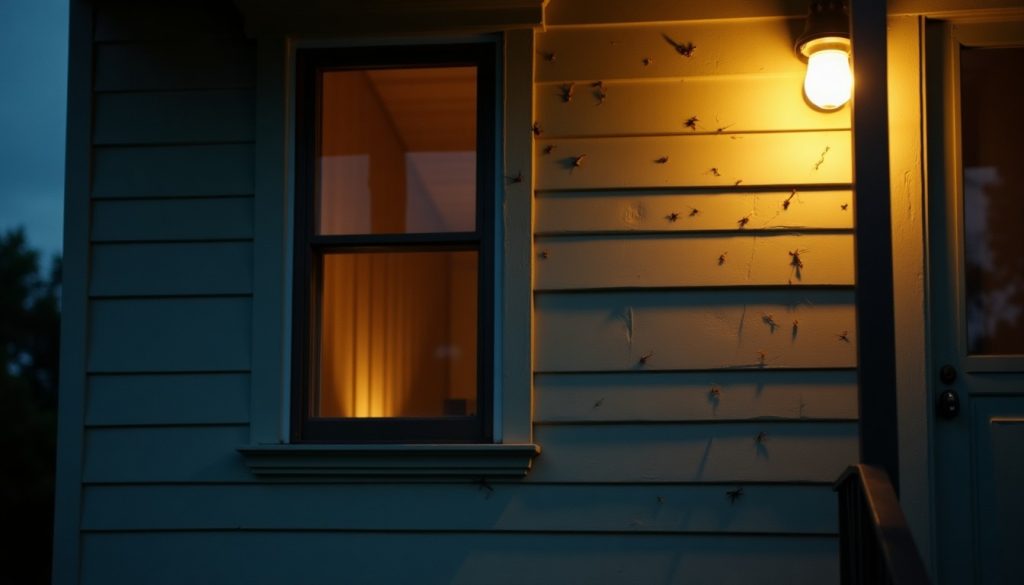
There are no insecticides approved specifically for kissing bugs in the United States, according to CDC guidance. That single fact reframes the whole subject: control of these insects is structural work, sealing and screening and lighting, rather than a product you can buy. Kissing bugs have been identified in 32 states, while locally acquired human Chagas infections have been documented in 8.
Chagas disease returned to the news in September 2025, when researchers argued in a CDC journal that the United States should be classified as a country where the disease is endemic. The coverage that followed was mostly clinical. What almost nobody wrote was the part a property owner can act on, which is what actually keeps the insect out of a bedroom.
What the endemic argument did and did not say
The paper was a perspective by named academic authors published in Emerging Infectious Diseases, not a policy declaration by the CDC. The authors argued that enough evidence exists to include the United States as an endemic country, and proposed the specific term hypoendemic, meaning constant low-level presence.
Endemic is a statement about persistence, not about risk rising or an outbreak occurring. CDC’s own page still describes the United States as a place where Chagas disease is present but not regularly spread by triatomine bugs. Both things are true at once, and the distinction is the whole story.
| Measure | Figure |
|---|---|
| States where kissing bugs have been identified | 32 |
| States with documented locally acquired human infections | 8: California, Arizona, Texas, Tennessee, Louisiana, Missouri, Mississippi, Arkansas |
| People estimated to be living with Chagas in the US | About 280,000, most of whom acquired it in Latin America |
| Locally acquired cases documented in Texas, 2013 to 2023 | 50 confirmed or probable |
| States where human Chagas is reportable | 8, plus 2 California jurisdictions |
The gap between 32 and 8 is the most honest single framing available. The insect is present across much of the southern half of the country; local transmission to people is rare and concentrated.
The transmission route changes what control means
Kissing bugs do not transmit the parasite by biting. They feed at night, and afterwards they defecate. Infection happens when those faeces are rubbed into a bite wound, the eyes or the mouth, often by someone scratching in their sleep or on waking.
That is why the target is not killing insects in the yard. It is keeping them away from where people sleep. A bug outdoors is a curiosity; a bug in a bedroom is the scenario the guidance is built around.
What actually reduces the risk
CDC and the Texas A&M kissing bug research programme give consistent, structural advice.
- Seal cracks and gaps around windows, walls, roofs and doors, and seal entrances to attics and crawl spaces.
- Repair window screens and stop leaving doors open without them.
- Move outdoor lighting away from the house. The insects fly toward lights and then crawl inside; turning off exterior lights at night where it is safe to do so removes the invitation.
- Clear harbourage near the structure: wood, brush and rock piles, and wild animal nests, which support the animals the bugs feed on.
- Bring pets indoors at night, particularly dogs that would otherwise sleep outside.
The general technique behind most of this is covered in pest-proofing your home. What differs for kissing bugs is the emphasis: sleeping areas first, lighting as a genuine control measure, and animal harbourage rather than food sources.
What to make of a company selling kissing bug treatment
Because no insecticide is approved specifically for these insects, any product applied is a general-use or broad-spectrum one, not something registered for this pest. CDC’s guidance is to talk with a pest control expert before using insecticides against them. Texas A&M’s recommendation is to work with an extension agent or a pest control company on integrated pest management, and notably it does not name a spray or a product.
That is not a reason to avoid professional help. It is a reason to know what you are buying. The valuable work here is inspection, identifying entry points, and exclusion, which is the same skill set that solves rodent and occasional-invader problems. A quote built entirely around a perimeter spray is answering a different question from the one the evidence asks. See what chemicals exterminators use and integrated pest management for the wider context.
Dogs are the part being missed
The risk to dogs is real and better documented than most owners realise. In a study of 205 dogs across seven Texas shelters, 8.8% tested positive for antibodies to the parasite, with every shelter in the network having at least one positive animal and prevalence ranging from 6.7% to 13.8%.
Dogs that spend time outdoors, live in rural areas, or live in multi-dog kennels carry the most risk. This is also why bringing animals in at night appears in the official guidance rather than as an afterthought.
Of the bugs submitted to the Texas A&M citizen science programme, which has received more than 7,000 from nearly 1,500 people, about 55% carried the parasite, though the programme notes infection rates vary by location.
If you think you have found one
Do not touch it with bare hands. Texas A&M’s programme accepts specimens for research, and identification matters because several harmless assassin bugs and leaf-footed bugs are mistaken for kissing bugs constantly. Finding one bug outdoors is not an infestation; repeated finds indoors, particularly in or near bedrooms, is the signal that exclusion work is needed. Our guide to early signs of infestation covers how to tell an occasional invader from a resident population.
On the medical side, about 20% to 30% of people with chronic infection eventually develop clinical disease, predominantly affecting the heart. Two drugs are used to treat infection, both given for 60 days, and treatment is most effective early. Once damage such as an enlarged heart is established, antiparasitic treatment will not reverse it. Anyone concerned about exposure should raise it with a clinician rather than a pest control company.
Frequently asked questions
What states have kissing bugs?
Kissing bugs have been identified in 32 states, concentrated across the southern half of the country. Locally acquired human infections have been documented in 8: California, Arizona, Texas, Tennessee, Louisiana, Missouri, Mississippi and Arkansas. Presence of the insect is far more widespread than local transmission to people.
Can you get Chagas disease from a kissing bug bite?
Not from the bite itself. The parasite is passed in the insect’s faeces, and infection occurs when those are rubbed into a bite wound, the eyes or the mouth. This is why keeping the insects out of sleeping areas matters more than killing them outdoors.
How do you get rid of kissing bugs?
Through exclusion rather than spraying. CDC guidance is to seal cracks and gaps around windows, walls, roofs and doors, seal attic and crawl space entrances, repair screens, move yard lighting away from the house, remove wood, brush and rock piles, and keep pets indoors at night. No insecticide is approved specifically for these insects in the United States.
Is Chagas disease curable?
Infection can be treated, most effectively when caught early, using one of two antiparasitic drugs given over 60 days. About 20% to 30% of people with chronic infection eventually develop clinical disease, mainly cardiac. Once that damage is established, antiparasitic treatment does not reverse it. This is a matter for a clinician.
Can my dog get Chagas disease?
Yes. In a study of 205 dogs across seven Texas shelters, 8.8% were seropositive, and positives were found at every shelter. Dogs kept outdoors, in rural areas, or in multi-dog kennels are at higher risk, which is why official guidance recommends bringing pets indoors at night.
What attracts kissing bugs to a house?
Lights at night are the main draw; the insects fly toward them and then crawl inside through gaps. Wood, brush and rock piles and wild animal nests near the structure support the animals they feed on. Reducing outdoor lighting and clearing harbourage are both recognised control measures.
Should I call pest control for kissing bugs?
It can be worth it, provided you understand what you are buying. Since no product is registered specifically for these insects, the value is in inspection and exclusion rather than a spray. CDC advises talking with a pest control expert before using insecticides, and Texas A&M recommends working with an extension agent or company on integrated pest management.
Sources
- Beatty NL, Hamer GL, Moreno-Peniche B, Mayes B and Hamer SA, Chagas Disease, an Endemic Disease in the United States. Emerging Infectious Diseases 31(9), September 2025. cdc.gov
- U.S. Centers for Disease Control and Prevention, Preventing Chagas Disease, February 2026. cdc.gov
- U.S. Centers for Disease Control and Prevention, How Chagas Disease Spreads, February 2026. cdc.gov
- U.S. Centers for Disease Control and Prevention, About Chagas Disease, September 2024. cdc.gov
- U.S. Centers for Disease Control and Prevention, Clinical Care of Chagas Disease, February 2024. cdc.gov
- Curtis-Robles R et al., Shelter Dogs as Sentinels for Trypanosoma cruzi Transmission across Texas. Emerging Infectious Diseases 20(8), 2014. cdc.gov
- Texas A&M University, Kissing Bugs and Chagas Disease in the United States. kissingbug.tamu.edu