Mole Crickets: Lawn Damage, the Soap Flush Test, When to Treat
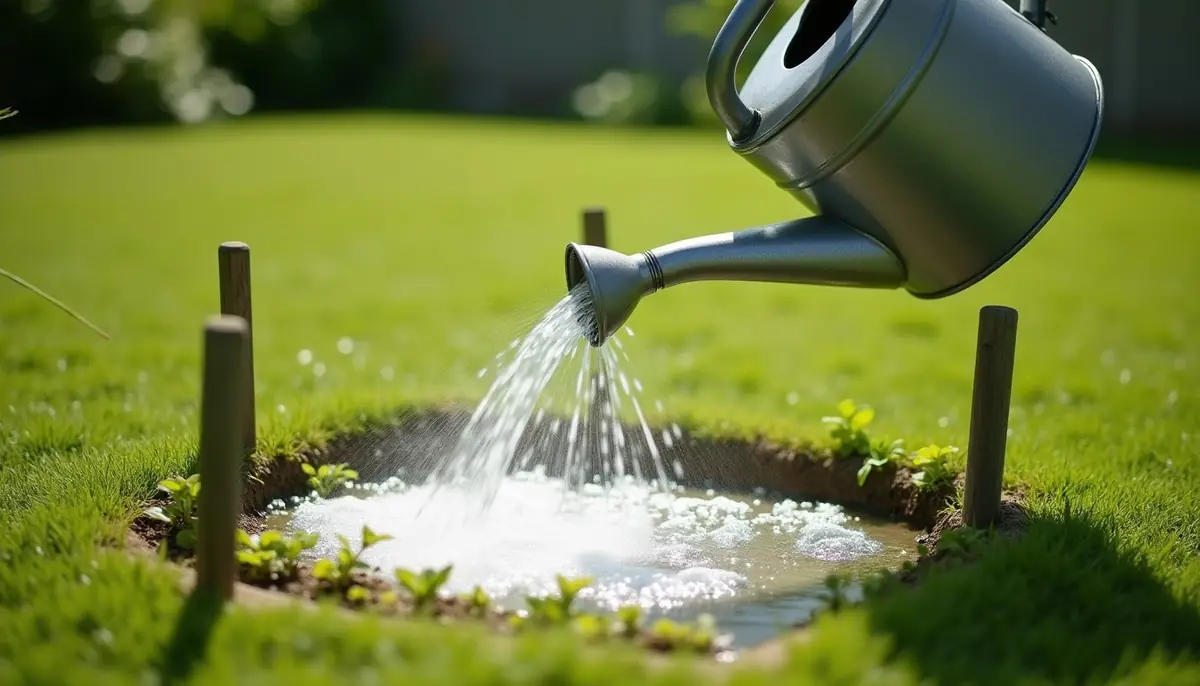
A mole cricket is a burrowing cricket about an inch long, with shovel-like front legs, and in the Southeast three invasive South American species tunnel through lawns and eat grass roots. They cannot bite or sting people. To check a lawn, the current UF/IFAS guide says to mix 1.5 tablespoons of dish soap in a gallon of water, pour it over a 2 by 2 foot square and count for three minutes; two or more crickets often justifies treatment. Treat small nymphs in June and July, not spring adults.
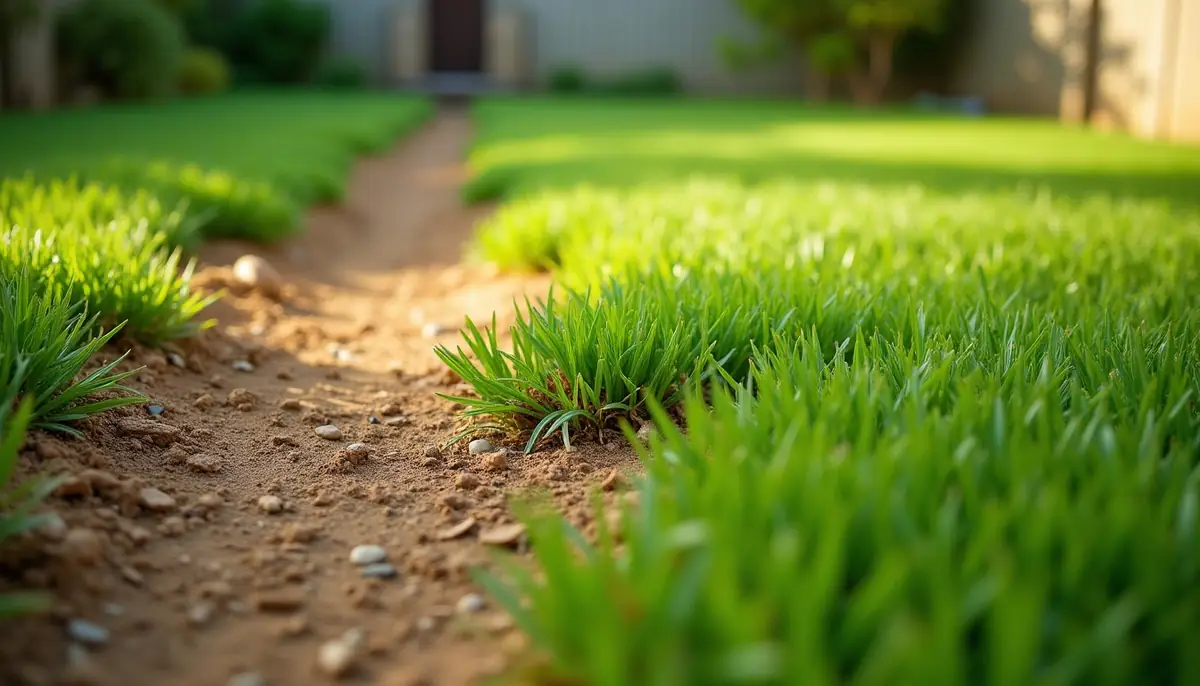
Mole cricket damage looks like soft, raised runs, small heaps of loose soil and patches that brown in late summer. Most of it comes from three introduced species; a native relative lives in the same states and is not a pest, which matters before you treat.
| Species | Native or introduced | Length | Main food | Pest status |
|---|---|---|---|---|
| Tawny mole cricket (Neoscapteriscus vicinus) | Introduced from South America, first recorded 1899 | 24 to 33 mm | Grass roots and shoots | The most destructive lawn species |
| Southern mole cricket (N. borellii) | Introduced, first recorded 1904 | 25 to 32 mm | Mostly other insects | Damages turf mainly by tunnelling |
| Short-winged mole cricket (N. abbreviatus) | Introduced about 1900; cannot fly | 22 to 29 mm | Plants | Local, mostly coastal Florida |
| Northern mole cricket (Neocurtilla hexadactyla) | Native | 19 to 33 mm | Not described as a turf feeder | Not a pest |
| European mole cricket (Gryllotalpa gryllotalpa) | Introduced to New Jersey and New York | 36 to 46 mm | Not detailed in our sources | Minor significance |
Compiled by The Pest Control Brief from UF/IFAS EENY-235 and IPM-206, the University of Florida Singing Insects of North America (SINA) species pages, NC State TurfFiles and Clemson HGIC 2155.
What is a mole cricket?
Mole crickets are crickets in the family Gryllotalpidae that live almost entirely underground. Iowa State Extension describes them as brown, about 1 1/4 inches long, covered in fine hair with a satin appearance, with short antennae, two long tail filaments (cerci) and greatly enlarged, spade-like front legs. Those legs carry blade-like projections called dactyls, and UF/IFAS gives the quickest field check: native mole crickets have four prominent dactyls, the pest species have two.
Telling the pest species apart
- Tawny: yellowish brown; the two dactyls nearly touch at the base, in a V. Clemson calls it the bigger, more robust of the two common pests.
- Southern: darker brown to almost black; dactyls well separated in a U; long hindwings reaching past the abdomen; Clemson notes four light dots on top of the head.
- Short-winged: also a U, but the forewings are shorter than the pronotum, so it cannot fly and has no calling song.
- Northern (native): four dactyls; SINA gives its habitat as lake and stream margins and low, mucky ground rather than open sandy lawns.
Sizes vary by source. SINA measures tawny adults at 24 to 33 mm (about 1 to 1.3 inches) and UF/IFAS gives 22 to 33 mm across the pests, while Clemson says tawny mole crickets mature to 1.5 to 2 inches.
Are mole crickets invasive?
The three Neoscapteriscus species are. UF/IFAS records the short-winged at Tampa in 1899, the tawny at Brunswick, Georgia, in 1899, and the southern at Brunswick in 1904, then Charleston in 1915, Mobile in 1919 and Port Arthur, Texas, in 1925. Clemson says they probably arrived in ships’ ballast from South America. UF/IFAS IPM-206 places the tawny within several miles of the Atlantic and Gulf coasts from North Carolina to eastern Texas, and the southern from southern North Carolina to central Texas, with reports from Yuma, Arizona, and Los Angeles County. NC State notes the tawny has been a pest in North Carolina only since 1987.
The northern mole cricket is native across the eastern states, west to about South Dakota and Texas. UF/IFAS researchers say native wasps and nematodes keep it in check, which is exactly what the South American species escaped.
Where do mole crickets live?
Pest mole crickets favour moist, sandy, open ground such as lawns, pastures and golf courses. They tunnel mostly in the top 20 to 25 cm (8 to 10 inches), just under the surface when soil is warm and moist and deeper when it is cool or dry (UF/IFAS).
Our analysis of iNaturalist research-grade records shows how concentrated the invasive genus is. Of 2,324 US records of Neoscapteriscus, 1,527 come from Florida, which also leads once recording effort is accounted for, at 2.72 records per 10,000 observations of anything. Mississippi (1.54) and Louisiana (1.09) follow. West of Texas the records nearly vanish: Arizona has 11, California 16.
What do mole crickets eat?
It depends on the species. UF/IFAS states that the tawny is principally herbivorous while the southern feeds mostly on other insects; NC State says the tawny feeds almost exclusively on grass roots and shoots. Both tunnel heavily, and UF/IFAS says the southern does much more tunnelling injury than the tawny. UF/IFAS also lists vegetable seedlings among plants injured, including tomato, pepper, cabbage, eggplant, strawberry, lettuce and onion, often girdled at the soil line or pulled into a tunnel. In lawns, IPM-206 rates bahiagrass, bermudagrass and seashore paspalum the most susceptible, and centipedegrass, St. Augustinegrass and zoysiagrass the least often injured.
Mole cricket damage: holes, mounds and tunnels
- Raised runs: soft ridges where tunnels lift the turf, most visible in the early morning with dew on the grass (UF/IFAS).
- Small mounds with a hole: a male’s funnel-shaped spring calling chamber. Clemson notes earthworm casts look like small pellets, while a mole cricket mound looks pushed up from below with a hole in the middle.
- Damage near lights and sprinklers: flying adults are drawn to lights and burrow into moist soil nearby, so IPM-206 says an initial infestation may centre on outdoor lights or sprinkler heads.
- Browning patches in late summer: Clemson says significant damage appears as crickets mature from late August to October.
- Fresh digging: armadillos, raccoons and birds hunt mole crickets, and IPM-206 warns armadillo foraging can itself badly damage turf.
How to get rid of mole crickets
Step 1: the soap flush test
Do not treat on tunnels alone. Confirm with a soap flush; the recipes differ by source.
| Source | Soap | Water | Area | Action threshold |
|---|---|---|---|---|
| UF/IFAS IPM-206 (current, 2021) | 3/4 oz (1.5 tbsp) | 1 gal | 4 sq ft (2 by 2 ft) | 2 or more in 3 minutes, in many cases |
| UF/IFAS ENY-324 and EENY-235 (archived) | 1.5 oz (2 tbsp) | 2 gal | 3 to 4 sq ft | 2 to 4 in 3 minutes |
| UF/IFAS IPM-144 (archived) | 1 to 2 tbsp | 1 gal | 2 sq ft | 2 to 4 large crickets in 3 minutes |
| Clemson HGIC 2155 (2022) | 1 to 2 fl oz | 1 gal | 2 sq ft | Used to map infested areas and life stage |
Compiled by The Pest Control Brief from the named extension publications. The older sheets and Clemson pour about half a gallon per square foot; the current UF/IFAS guide uses half that volume with a slightly stronger mix and sets a lower bar. IPM-206 also gives 2 to 4 adults per 4 square feet as a general upper limit for turf. Flush moist soil in several spots and mark where crickets surface: Clemson says they infest the same areas year after year, so you can treat only those patches. Our lawn pest control guide covers the same flush for chinch bugs and webworms.
Step 2: time it to the nymphs
Spring adults die once their eggs are laid, so Clemson advises against treating them unless damage is severe. IPM-206 says small nymphs feeding in summer are more susceptible to insecticides than the large nymphs of late summer and autumn.
| Months (Carolinas and north Florida) | What the crickets are doing | What to do |
|---|---|---|
| Late February to May | Adults fly at dusk, call and mate; mounds appear | Flush and map hot spots; switch off or change outdoor lights |
| April to June | Eggs in soil chambers hatch in 10 to 40 days | Watch for hatch; water if the soil is dry |
| June to early August | Small nymphs under half an inch; little visible damage | Best window for a labelled lawn insecticide |
| Late August to October | Large nymphs and new adults; damage shows | Evening baits on dry nights; follow-up only if activity stays high |
| Winter | Deep in the soil as large nymphs or adults | Treatment least effective |
Compiled by The Pest Control Brief from Clemson HGIC 2155, NC State TurfFiles and UF/IFAS IPM-206 and ENY-324. South Florida runs earlier, and southern mole crickets there have two generations a year.
Clemson says the best time to treat is June and July, and NC State gives the same window for a common soil insecticide: apply while crickets are under half an inch. Water the day before so crickets move up, and apply late in the day. Baits go out in the early evening; rain or irrigation ruins them, and Clemson says to wait 2 to 3 days before watering. Rotate insecticide classes to avoid resistance, never use a product off-label, and never mix products.
No programme gives 100 per cent control, Clemson notes. For a home lawn, one well-timed treatment of the mapped patches is usually enough. A golf green, sports field or pasture, or a lawn still failing after correctly timed treatment, is a job for a licensed turf professional; restricted-use products must be applied by a licensed applicator.
Step 3: biological control
Florida’s programme is a well-documented biological control success: UF/IFAS imported three South American enemies that attack the pests but not the native species.
| Natural enemy | Introduced | How it works | Where it is now |
|---|---|---|---|
| Larra bicolor, a wasp that does not sting people | South Florida 1981; north Florida 1988 | Lays an egg on the cricket; the larva feeds 10 to 11 days and kills it | North and central Florida, parts of south Florida, south and east Georgia, coastal Alabama and Mississippi, recently the Carolinas |
| Ormia depleta, the Brazilian red-eyed fly | Released from 1988 | Females find singing males by sound and deposit larvae on them | Central and south Florida, north to Alachua County |
| Steinernema scapterisci, a nematode | From Uruguay, 1985 | Enters the cricket and releases a bacterium | Present in Florida; widely applied as a biopesticide until 2012 |
Compiled by The Pest Control Brief from UF/IFAS IPM-206, EENY-708, EENY-235, ENY-324 and UF/IFAS News (2005), which disagree on how fast the nematode kills: 48 hours, 12 days or two weeks.
In 2005 UF/IFAS researcher Howard Frank reported that the three agents had cut mole cricket populations in the Gainesville area by 95 per cent. Golf course surveys in 1991 and 1992 found that 85 per cent of respondents in counties where the fly was expected to be established reported less turf damage, against 46 per cent elsewhere.
IPM-206 says all three agents are present in Florida but none is available commercially, so a homeowner’s job is to help the wasp. Larra wasps need nectar: the guide names shrubby false buttonweed (larraflower) as preferred, but it can be invasive and should be contained, with white-flowered pentas and partridge pea as alternatives (partridge pea may be toxic to livestock). Wasps forage at least 200 yards from nectar. Clemson still describes a beneficial nematode product as the only commercially available non-chemical option, but warns it can be slow and may not match chemical control.
Lights
Mole crickets fly at dusk for 1 to 2 hours and are attracted to light, especially ultraviolet and mercury vapour lamps. IPM-206 advises switching lights off during peak flights, or using yellow bulbs or filters if lights are needed.
Mole cricket sound
Male tawny and southern mole crickets call from a horn-shaped burrow opening that amplifies the song. SINA describes the tawny’s call as a loud, nasal trill in the first 90 minutes after sunset, and the southern’s as a lower, ringing trill in the first two hours. The native northern mole cricket chirps rhythmically, afternoons as well as evenings. Our guide to bugs that make noise at night compares these songs with crickets, katydids and cicadas.
When mole crickets are active
Our iNaturalist data separate pests from natives. Invasive mole cricket records peak in March, at 217 on our seasonality index, during spring flights, sink through summer while nymphs feed underground, and rise again from October to December. The native northern mole cricket peaks from August to October. Both samples are small, about 2,000 records each, so treat the curves as a guide.
Frequently asked questions
Are mole crickets dangerous?
Not to people or pets. Iowa State Extension says mole crickets are completely harmless indoors: they cannot bite or sting and do not eat fabric, paper or the house. The danger is to turf and seedlings. The invasive tawny, southern and short-winged species damage lawns, golf courses, pastures and vegetables in the Southeast, which UF/IFAS put at $94 million a year in damage to turf and pastures.
What is a mole cricket?
A mole cricket is a burrowing cricket in the family Gryllotalpidae, about an inch to an inch and a half long, brown and velvety, with enlarged, spade-like front legs for digging. In the US the pests are three South American Neoscapteriscus species introduced around 1900; the native northern mole cricket is not a pest.
How to get rid of mole crickets?
Confirm first with a soap flush: 1.5 tablespoons of dish soap in a gallon of water over a 2 by 2 foot square; UF/IFAS says two or more crickets surfacing within three minutes often justifies action. Treat the mapped patches in June and July, when nymphs are under half an inch, with a labelled lawn insecticide, and turn off outdoor lights during spring flights. Follow the label every time.
Do mole crickets bite?
No. Iowa State Extension states that mole crickets cannot bite or sting, and that one wandering indoors only needs to be swept up and put outside. The Larra wasp that hunts them in Florida does not sting people either, according to UF/IFAS. If mole crickets keep getting indoors, sealing cracks and gaps around doors and the foundation keeps them out.
What do mole crickets eat?
The tawny mole cricket eats mainly grass roots and shoots, which makes it the worst lawn pest. The southern mole cricket feeds mostly on other insects and soil animals, though its tunnelling still damages turf. UF/IFAS also lists vegetable seedlings such as tomato, pepper, cabbage and strawberry among plants injured, often cut at the soil line and pulled into a tunnel at night.
Sources
- University of Florida IFAS Extension, IPM-206 (IN1021), Mole Cricket IPM Guide for Florida, Kerr, Leppla, Buss and Frank, 2014, revised 2021.
- University of Florida IFAS Extension, EENY-235 (IN391), Mole Crickets, Scapteriscus spp., Capinera and Leppla, 2001.
- University of Florida IFAS Extension, ENY-324 (LH039), Pest Mole Cricket Management, Buss, Capinera and Leppla, revised 2006 (archival).
- University of Florida IFAS Extension, IPM-144, How to Use Beneficial Nematodes against Pest Mole Crickets in Home Lawns, 2006 (archival).
- University of Florida IFAS Extension, EENY-708, Brazilian Red-Eyed Fly, Ormia depleta, Ray and Gillett-Kaufman, 2018.
- UF/IFAS News, UF Researchers Declare Victory in 25-Year Battle Against Invasive Mole Cricket Pests, June 2005.
- Singing Insects of North America (SINA), University of Florida: tawny, southern, short-winged, northern, European and prairie mole cricket pages.
- Clemson Cooperative Extension, HGIC 2155, Mole Cricket Management in Turfgrass, updated 2022.
- NC State Extension TurfFiles, Mole Crickets in Turf, Brandenburg and Billeisen, updated 2022.
- Iowa State University Extension and Outreach, Yard and Garden Encyclopedia: Mole Cricket.
- The Pest Control Brief analysis of iNaturalist research-grade records, pulled October 2026.